Choosing Serveware for Everyday Use
A composed approach to serving, where material, form, and daily rhythm shape the dining surface
Serveware is often associated with occasion, yet its true value lies in everyday use. Bowls, trays, and objects placed on a table do not need to be reserved—they can remain present, integrated into daily life.
When chosen with intention, serveware becomes part of the surface itself—holding both function and quiet continuity.
Understanding Everyday Serveware
What defines serveware for daily use?
Everyday serveware balances function with presence.
It should be easy to use, easy to return, and capable of remaining on the surface without disrupting the space. This allows it to move naturally between use and rest.
The object becomes part of the rhythm rather than an interruption to it.
Choosing the Right Material
Which materials suit everyday serveware?
Material defines both experience and durability.
Marble introduces weight and stillness, often used for bowls or trays that remain central to the table. Onyx is the same stone chemically—calcium carbonate, at roughly the same density and hardness—and differs in how light moves through it rather than in how it performs. Both are translucent at the edge where the section thins. Wood offers warmth and ease, often suited to more flexible or frequent handling.
Each material shapes how the piece is used and perceived.
Balancing Form and Function
How should serveware be selected?
Form should support everyday use.
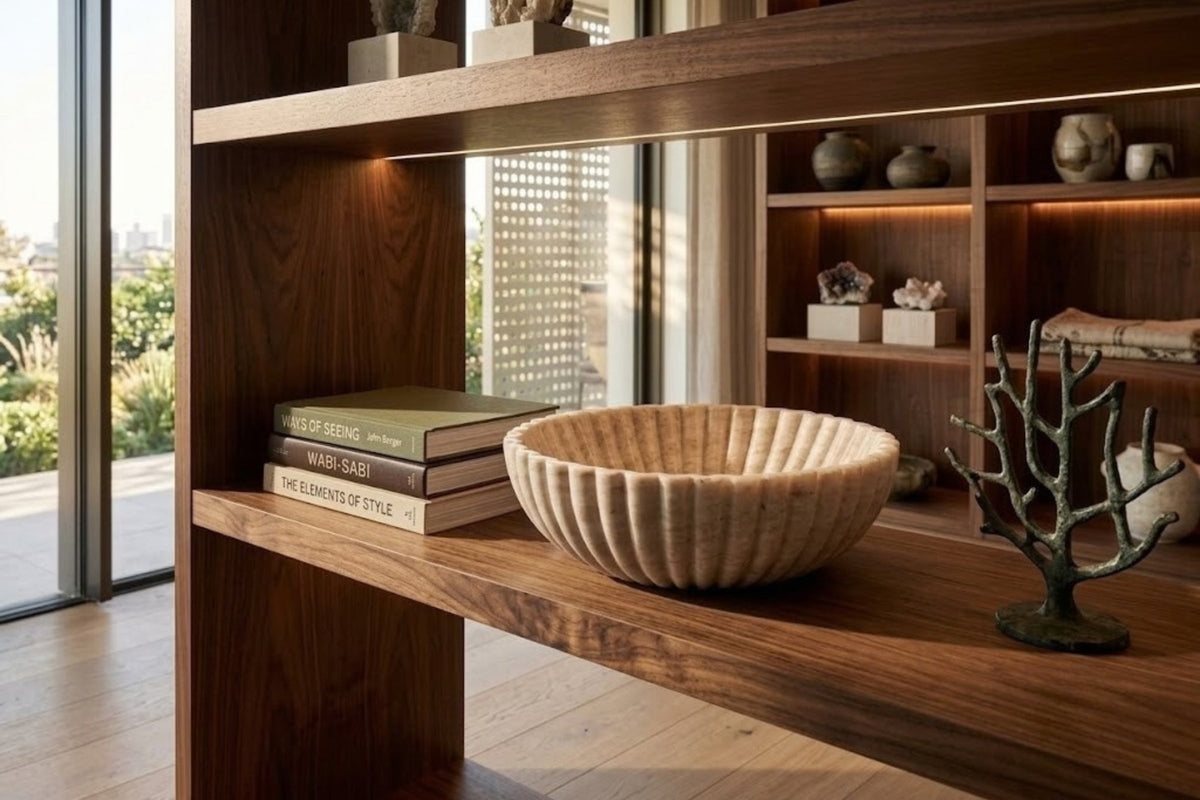
A wide stone bowl shaped for everyday serving allows contents to remain visible and accessible, while trays support movement across the table without dispersing objects.
The choice depends on how the piece will be used daily.
Scale Within the Dining Setting
How large should serveware be?
Scale should align with the table.
Larger tables can hold wider bowls or trays that anchor the surface. Smaller tables require more contained pieces that do not overwhelm the space.
Serveware should feel proportionate, allowing space to remain around it.

Placement and Composition
Where should serveware be placed on a table?
Placement follows use.
A marble bowl often sits centrally, anchoring the table. Trays may be placed slightly offset, allowing movement across the surface while maintaining structure.
The arrangement should remain adaptable—never fixed or overly defined.
Keeping the Surface Minimal
How much serveware should be used daily?
Restraint creates clarity.
One primary element—such as a bowl or tray—is often sufficient. Additional pieces should be introduced only when necessary for use, then removed or repositioned.
A dining surface should remain open.

Integrating Serveware into Daily Life
Should serveware be stored or left out?
It can remain in place.
A marble bowl or onyx tray can stay on the table between uses, becoming part of the everyday setting. This reduces the need for constant rearrangement and reinforces continuity within the space.
The object becomes familiar rather than occasional.
What Daily Use Actually Does
Does daily use affect serveware?
It wears it, and the two materials wear differently.
Stone wears. Marble and onyx are calcium carbonate, and acid etches calcium carbonate on contact: lemon, vinegar, wine, and tomato leave a dull mark where they sat, not after a season of neglect but at the moment of the spill. A steel blade is harder than the stone, so cutting on the surface scratches it. Neither is a settling-in. Both are wear, and both are worth preventing with a board, a liner, and a cloth used promptly.
Wood is a different case. It genuinely deepens in tone as it takes up oil from handling, evenly and across the whole surface, and that change is an improvement rather than damage.
Knowing which is which decides what each piece should be asked to carry.
Avoiding Over-Selection
What should be avoided when choosing serveware?
Excess and redundancy.
Multiple pieces that serve similar functions can create visual and functional clutter. Selecting fewer, more considered objects ensures each piece holds its place clearly.
The goal is not variety, but cohesion.
Choosing a Specific Piece
Where should the selection start?
With the piece, not the category.
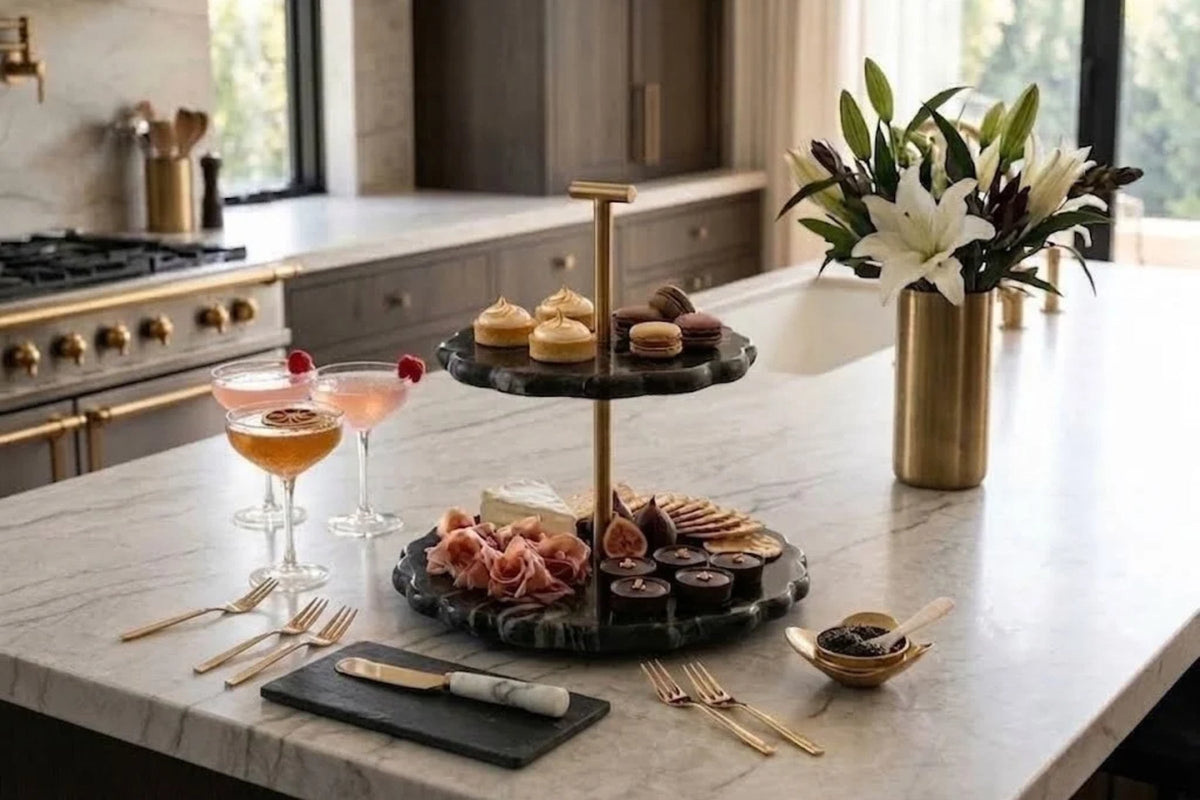
Serveware is decided one object at a time, and each type carries its own constraints. A cheese board is judged on surface area and edge treatment, while cheese knives are judged on blade shape against the texture being cut. A cake stand is decided by raised height and plate diameter. Tray size, material, and use follow from what the tray is asked to carry and how far.
The smaller pieces are no less specific. Coasters are an absorbency question before they are a styling one. Bar tools are decided by reach and weight in the hand. A wine chiller comes down to thermal mass and bottle fit.
The broad principle sets the direction; the individual piece is where it is settled.
Applying Serveware Across Spaces
Can serveware be used beyond the dining table?
Yes, across multiple surfaces.
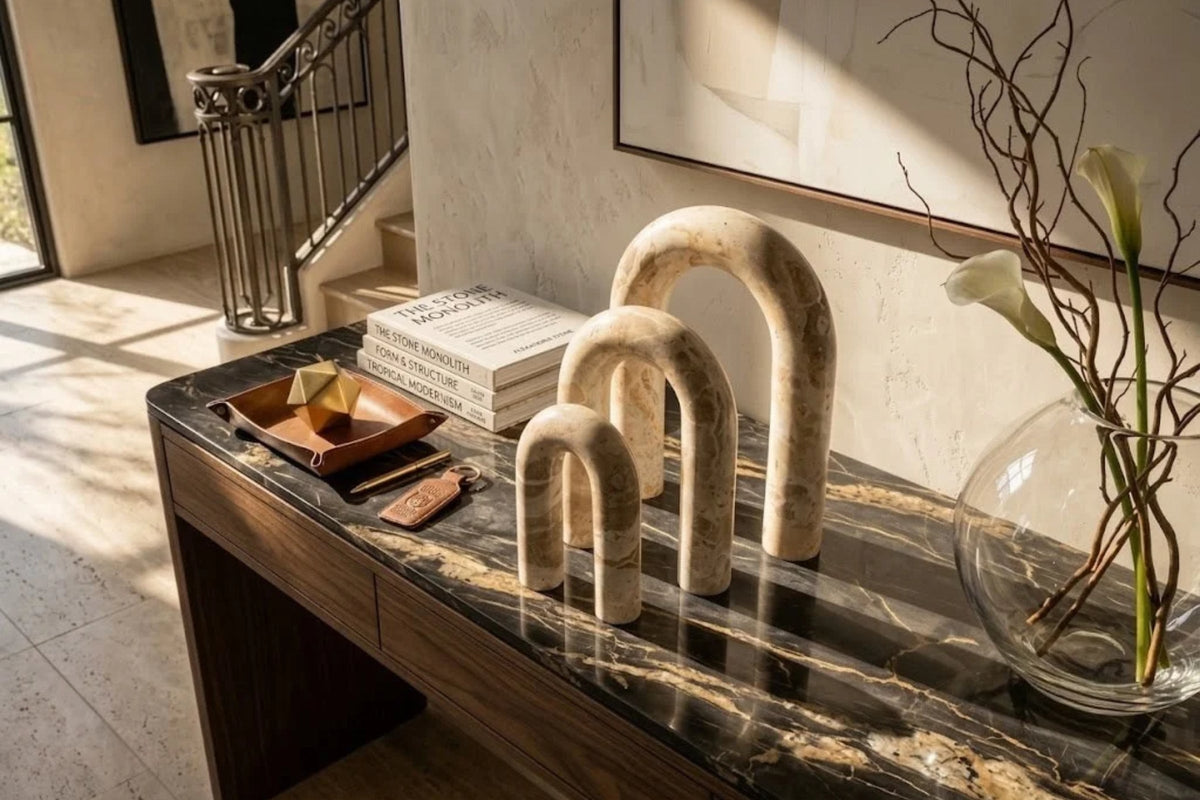
Bowls and trays may move between dining tables, coffee tables, and consoles—often alongside boards, servers, and other table pieces, maintaining their presence even when not in active use.
They adapt without losing presence.
Quick Answers
What serveware works for everyday use?
Minimal, well-proportioned bowls and trays that stay on the table between uses and move easily from serving to rest. One anchoring piece is usually enough. Choose by how the object will actually be handled each day, not by how it looks when the table is fully set.
Can marble bowls be used daily?
Yes, with one caution. Marble is calcium carbonate, so acid etches it on contact: lemon, vinegar, wine and tomato leave dull marks where they sit. Serve those in a liner or wipe spills immediately. For dry food, bread, fruit and nuts, daily use is straightforward.
How many serveware pieces should be on a table?
One primary piece is usually enough, with additional items brought out only when a meal calls for them and returned afterward. A table reads clearly when a single bowl or tray holds the center and the surface around it stays open rather than filled.
Should serveware match the dining table material?
Contrast usually reads better than matching. Stone against wood gives weight against warmth, and the two materials stay legible as separate things. Matching material to material tends to flatten the surface, since nothing distinguishes the object from the table it sits on.
Is serveware only for special occasions?
No. Serveware is most useful when it stays in daily circulation rather than waiting in a cupboard for guests. A bowl or tray left on the table becomes part of the room's furniture, and pieces chosen for constant handling get used far more than pieces reserved.
Final Note
Serveware does not need to be reserved—it becomes more meaningful when used daily.
Through material, form, and restraint, it settles into the rhythm of the home—holding both function and quiet presence without distinction.