How to Choose a Wine Chiller: Stone, Ice and What Each Does
A stone wine chiller holds a temperature. It does not create one.
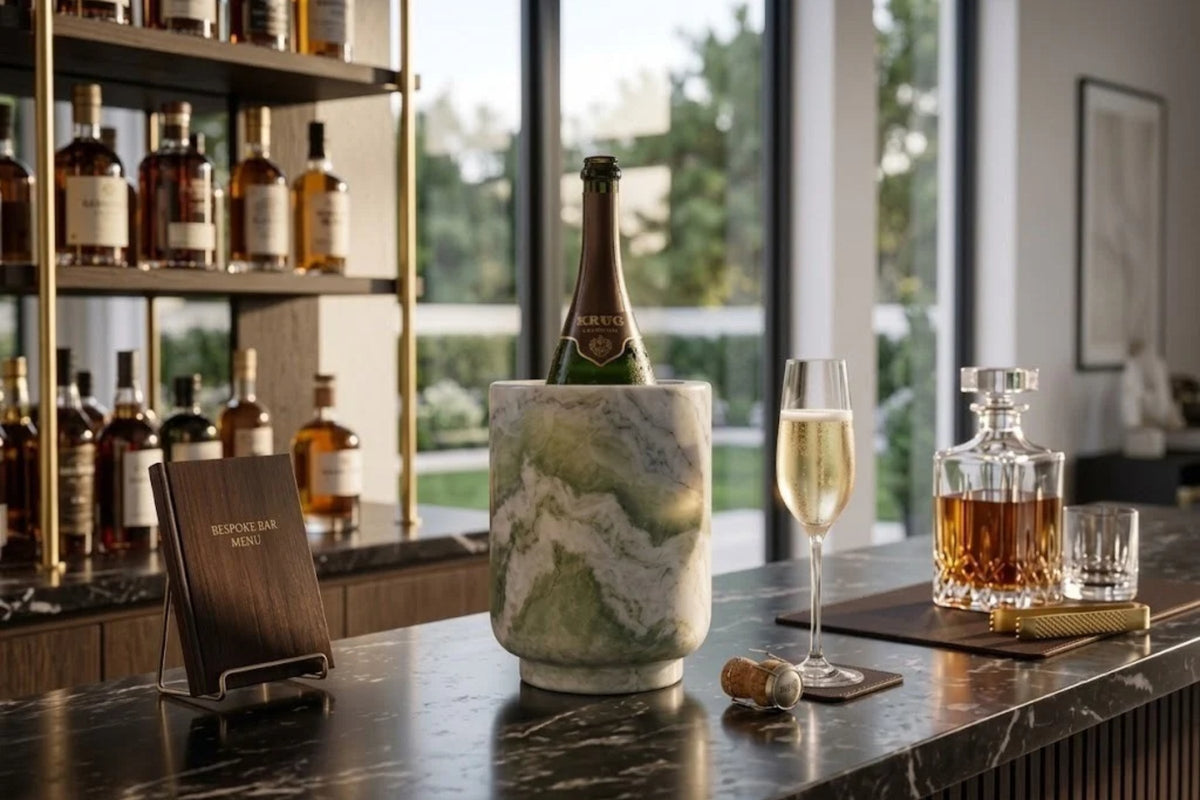
A solid stone cooler works, but not in the way most people expect. It has no refrigeration in it and nothing to melt — it is a block of calcium carbonate with a bottle-shaped hollow. What it does is resist the room, slowly, and hold whatever temperature it was given before the bottle went in.
Which means the single decision that determines whether it works is made before the guests arrive: chill the stone. A cooler taken from a cupboard at room temperature will warm a chilled bottle rather than cool it, and by more than most people would guess.
What the Stone Can and Cannot Do
Does a stone wine chiller actually work?
Yes, as a buffer rather than a chiller. Stone slows the rate at which a bottle picks up heat from the room, which extends the window in which wine is at its intended temperature. It cannot bring a warm bottle down to serving temperature, because it does not hold enough cold to spend.
The distinction matters because the two jobs are marketed as one. Cooling a bottle is a large energy transfer. Holding a bottle is a small one. Stone is well suited to the second and structurally incapable of the first.
Stone is slow to take on heat from the air around it — far slower than metal. That slowness is precisely the useful property: whatever temperature the stone was given at the start is still largely there an hour later.
What the Stone Actually Moves
How much can a stone cooler change a bottle's temperature?
Two or three degrees Celsius, in the right direction, if the stone was chilled first. A bottle of wine and its glass hold considerably more heat than the stone around them does. The stone is the smaller party in the exchange, and that caps what it can do.
Take a cooler straight from the refrigerator and put a slightly-too-warm bottle into it. The two meet somewhere in between, and the wine comes down two or three degrees Celsius. Useful, and roughly the width of one serving-temperature band.
Now reverse it. A cooler that has been sitting in a warm room, and a bottle straight from the refrigerator, meet in between as well — except this time the wine goes up, and by more than it came down in the first case. It does so faster than it would have on an open counter, because stone carries heat into the bottle more readily than still air does.
That is before the room is taken into account, and the room works against you the whole time. The direction is what matters: the cooler amplifies whatever temperature it is holding, in either direction.
Chilling the Stone
How do you prepare a stone wine cooler?
Put it in the refrigerator for at least two hours, or the freezer for around thirty minutes, before it is needed. It should feel cold through, not just at the surface. Stone conducts slowly in both directions, so a short chill reaches only the outer few millimeters.
The slowness cuts both ways and is the reason the object is worth owning. Once cold through, the same low conductivity that made it slow to chill makes it slow to give that cold back to the room. A cooler chilled properly holds a bottle through a dinner. One chilled for ten minutes does nothing at all.
Cold stone will pull condensation from humid air. That is expected and harmless, though it argues for a coaster or a tray under the cooler on a wood surface.
When Ice Is the Right Tool
What actually cools a warm bottle of wine?
Ice and water together. The advantage is not that ice is cold but that melting it draws an enormous amount of heat out of whatever is touching it. A handful of ice, melting, will pull more heat from a bottle than a whole cooler of stone can.
No amount of stone competes with that, because stone has nothing equivalent to spend. Marble taken all the way from room temperature down to freezing still gives up far less than a small quantity of melting ice absorbs.
Water matters as much as the ice. Water carries heat away far better than air does, so a bottle packed in dry cubes with air gaps between them chills far more slowly than one sitting in slush. Fill the bucket with water, not just ice.
Salt is what makes an ice bath quick. It lowers the freezing point of the water, so the bath sitting around the bottle is genuinely below zero rather than merely at it, and a salted bath will bring a bottle down in a fraction of the time the freezer takes.
What Temperature Each Wine Wants
What temperature should wine be served at?
Sparkling and light whites at 38–45°F, or 3–7°C. Rosé and full-bodied whites at 44–55°F, 7–12°C. Light and medium reds at 55–60°F, 12–15°C. Bold reds at 60–68°F, 15–20°C — cooler than most rooms, which is the point people miss.
The bands are narrow, and a bottle on an open table crosses one in well under an hour. This is the whole argument for a cooler on the table rather than trips back to the refrigerator: not that it chills, but that it slows the drift.
It is also why red benefits from a cooler as much as white does, in a warm room. A red served at 24°C reads flat and alcoholic. Twenty minutes in chilled stone brings it back into range.

Form, Size and What to Check
What should you look for in a wine cooler?
Wall thickness, base width and whether it is solid stone or a veneer. Thicker walls hold more; a broad base resists being knocked when someone reaches across a table. A hollow or veneered cooler has neither the mass nor the conductivity to do the job.
Height should clear the shoulder of a standard bottle without swallowing the neck, and the interior needs enough width for a Burgundy bottle, which is broader than a Bordeaux. A notched rim seats the neck at a tilt so the bottle can be taken and returned without looking.
Fluted or chiseled exteriors are not only surface treatment. Channels cut into the outside give a wet hand something to grip when the cooler is lifted full, and they hide the marks a bottle leaves. For how the same choice plays out across a bar counter, our notes on choosing bar tools and on curating a home bar cover the pieces around it.
Onyx, Marble and Care
Is onyx or marble better for a wine cooler?
Thermally there is nothing between them. Both are calcium carbonate, near enough identical in weight and in how they hold cold, so both behave the same way in this use. The choice is visual — onyx is more translucent, marble more opaque.
Where the two differ is what happens to the surface. Wine is acidic — tartaric acid — and calcium carbonate reacts to acid, leaving a dull etch where a drip was left to sit. A run down the outside of a cooler is the most common way this happens, and it is entirely preventable by wiping the stone dry after use.
The comparison between the two stones covers where each belongs, and the mechanism behind etching is set out in serving food on marble. Routine upkeep is in our marble and onyx care notes.
Choosing a Cooler
For a bottle that stays on the table, the Chamonix cooler, onyx hollowed from a single block, carries a curved notch cut into the rim that seats the neck at a tilt and angles it out for reach. The Taraz cooler, cut with deep diagonal flutes, runs heavier through the walls and broader at the base, which is the pair of properties that matters most.
Where a warm bottle has to come down rather than hold, an ice bucket is the tool — the Chicago bucket, steel under a bonded wood sleeve, or the Copenhagen bucket over a double-wall steel liner, which keeps the exterior dry while ice and water do the work inside.
Quick Answers
Does a stone wine chiller actually work?
Yes, as a buffer rather than a chiller. Stone slows the rate at which a bottle takes on heat from the room, extending the window in which wine sits at its intended temperature. It cannot bring a warm bottle down to serving temperature, because it holds no reserve of cold to spend.
Do you have to chill a stone wine cooler first?
Yes, and it is the decision that determines whether it works. Refrigerate it for at least two hours, or freeze it for thirty minutes, until it is cold through rather than only at the surface. A cooler left at room temperature will warm a chilled bottle by several degrees.
How much does a stone cooler change a bottle's temperature?
Two or three degrees Celsius when properly chilled, and no more. A bottle of wine and its glass hold considerably more heat than the stone around them does, so the stone is always the smaller party in the exchange. That caps what it can do, in either direction.
What actually cools a warm bottle of wine fast?
Ice and water together, with salt if speed matters. Melting ice pulls far more heat from a bottle than cold stone ever will, and water carries that heat away much faster than air does. Fill the bucket with water rather than dry cubes, which leave insulating air gaps around the bottle.
Is onyx or marble better for a wine cooler?
Thermally they are equivalent. Both are calcium carbonate, near enough identical in weight and in how they hold cold, so both perform the same way in this use. The difference is visual — onyx is more translucent, marble more opaque. Both etch where acidic wine is left to sit.
Final Note
The appeal of a stone cooler is usually described in terms of how it looks on a table, which undersells it. The reason it belongs there is that it is doing something — slowly, invisibly, and only if it was prepared. An object that requires two hours of forethought to work properly is an unusual thing to sell, and an honest one to own.
Used that way, it removes the least pleasant part of a long dinner: the bottle going quietly wrong in the middle of the table while everyone is talking. The stone does not fix that. It buys the hour in which nobody has to think about it.