Understanding Scale in Decorative Objects
A quiet calibration of proportion, where size, spacing, and placement define how objects are perceived within a room
Decorative objects are not experienced in isolation. Their presence is shaped by the scale of the surface, the surrounding elements, and the space they inhabit.
When scale is considered, objects feel intentional. When it is overlooked, even well-chosen pieces can feel misplaced.
Understanding Scale in Interiors
What does scale mean in home decor?
Scale refers to the relationship between an object and its surroundings.
It is not only about size, but about proportion—how an object relates to the surface it sits on and the space around it.
This question sits inside a larger one. Proportion across a room governs how furniture, surfaces, and open floor relate to one another. This piece narrows to the object itself: what a bowl, an arch, or a sphere should measure against the surface it occupies.
Object to Surface Relationship
How should objects relate to the surface they are placed on?
Objects should feel proportionate to the surface.
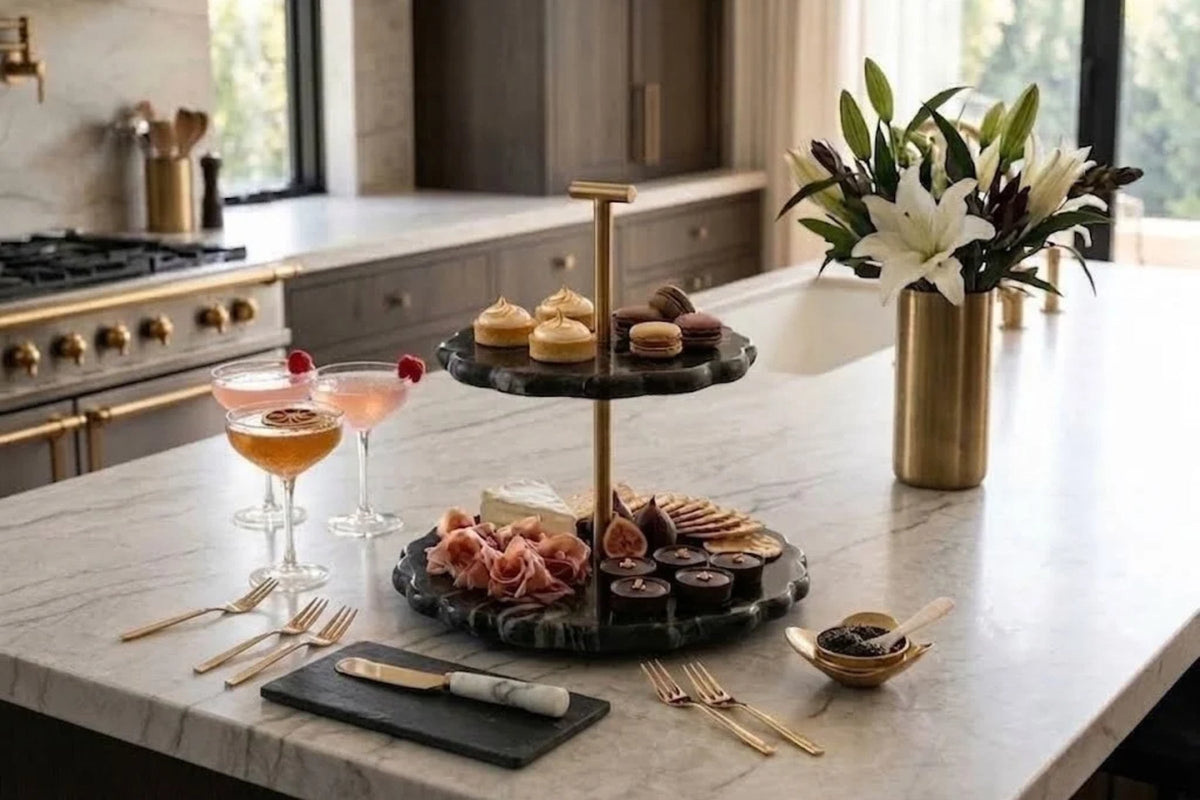
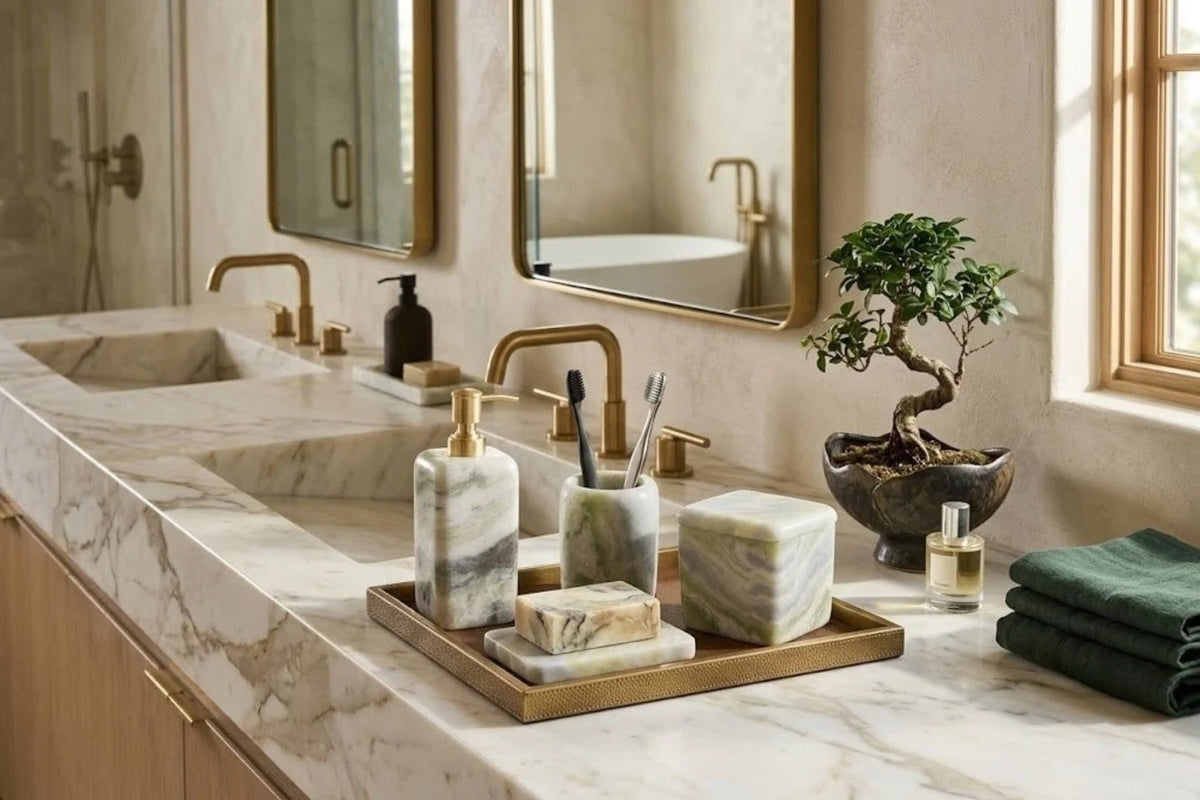
A stone object that holds visual weight within the space on a large coffee table should carry enough presence to anchor the setting, while more contained forms suit smaller surfaces.
The surface should remain visible, allowing both object and base to be clearly defined.

Balancing Large and Small Elements
Should objects vary in size within a space?
Variation creates depth.
Larger elements establish presence, while smaller objects introduce detail. This contrast allows the composition to feel layered without becoming crowded.
Balance is achieved through difference, not uniformity.
Spacing and Negative Space
How much space should be left between objects?
Space defines clarity.
Allowing visible space around objects ensures each piece can be perceived individually. When objects are placed too closely, their presence becomes diluted.
Density is a related but separate problem. Layering objects without clutter deals with how many pieces a surface can carry; this piece deals with how large each one should be. A surface can fail on either count independently.
Scale Within Groupings
How should grouped objects be sized?
Groupings should vary in height and volume.
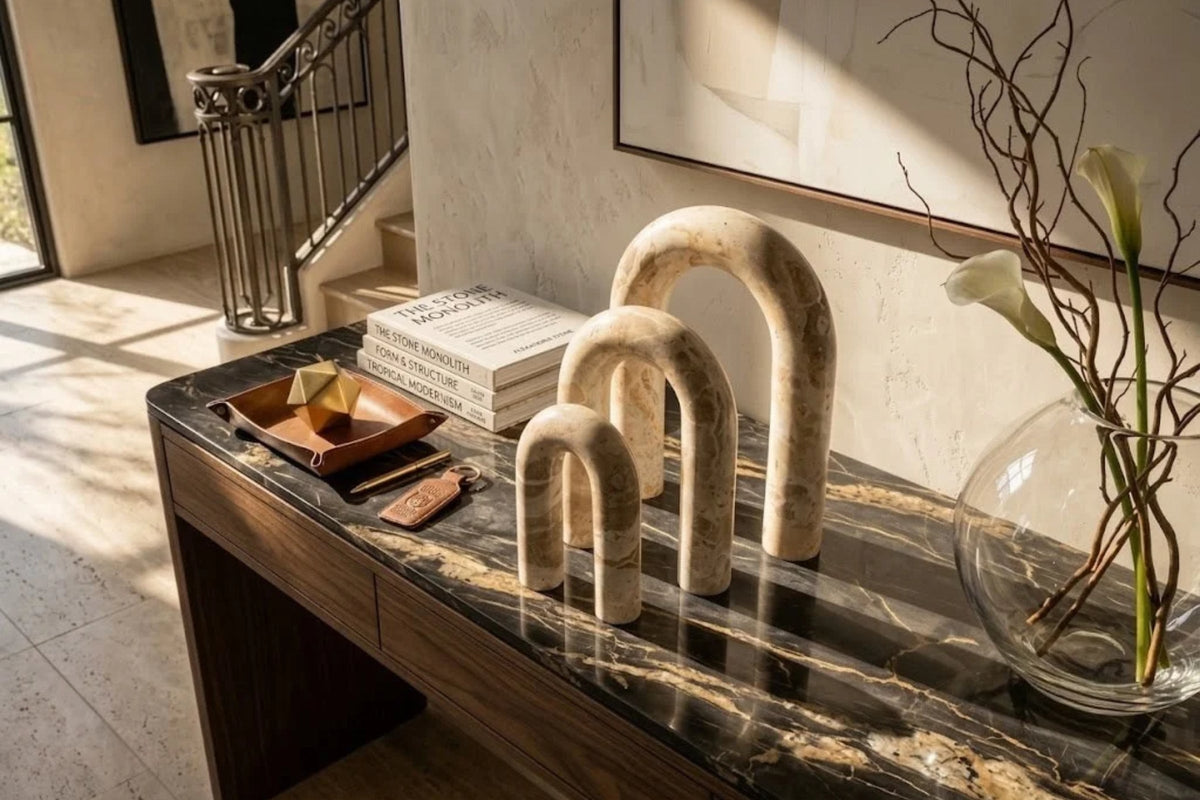
A combination of one larger object with one or two smaller elements often creates a balanced arrangement. Uniform sizing may feel static, while varied scale introduces movement.
The grouping should feel cohesive rather than repetitive.
Vertical and Horizontal Balance
Does height matter in decorative objects?
Height introduces dimension.
Low, grounding forms—such as low stone trays and bowls—anchor the surface, while a slightly taller element introduces vertical presence.
Height should remain subtle, not dominant. Layering height deliberately across a room is treated separately in creating balance through height and scale; here the concern is the single object and the surface beneath it.

Scale Across Different Rooms
Does scale change depending on the space?
Yes, scale responds to context.
Larger rooms and surfaces can hold more substantial objects, while smaller spaces require restraint. The same object may feel appropriate in one setting and excessive in another.
Selection should always respond to the environment.
Avoiding Common Scale Mistakes
What disrupts scale in a room?
Imbalance and overcrowding.
Objects that are too small may feel insignificant, while those that are too large may dominate the space. Similarly, placing too many objects together reduces clarity and disrupts proportion.
Scale requires restraint as much as selection.
Using Scale to Create Focus
How can scale guide attention?
Scale creates focal points.
A slightly larger object placed centrally can anchor a surface, while smaller elements support it without competing. This hierarchy directs how the space is read.
Focus emerges through proportion.
Applying Scale Across Materials
Does material affect perceived scale?
Material influences visual weight.
Stone objects often feel heavier and more grounded, while textiles and lighter materials feel more fluid. A smaller stone object may carry the same presence as a larger textile element.
Perception is shaped by both size and material.
Quick Answers
What does scale mean in home decor?
Scale is the relationship between an object and everything around it: the surface it sits on, the objects beside it, and the room itself. It is not size in isolation. The same object can read as correctly proportioned on one table and undersized on another.
How do you choose the right size decorative object?
Measure against the surface first. An object should occupy enough of the surface to register from across the room, while leaving visible ground on every side. As a working rule, no single object should cover more than about a third of the surface it sits on.
Should decorative objects be grouped or spaced apart?
Group them, but leave visible space between each piece. Objects touching or overlapping merge into one silhouette and lose individual definition. A gap roughly equal to the width of the smallest object in the group keeps each one legible while still reading as a deliberate arrangement.
Why do some objects look too small or too large in a room?
Because they were chosen against the object itself rather than against the setting. A piece bought for a shelf often fails on a console, and a floor-scaled form overwhelms a side table. Proportion is judged in place, with the surrounding furniture and wall in view.
Does material affect how large an object appears?
Yes. Visual weight is not the same as volume. Dense, solid stone reads heavier than a textile or open metal form of identical dimensions, so a smaller stone object can carry the same presence as a much larger soft one. Match weight, not measurement.
Final Note
Scale is not measured—it is felt.
When proportion, spacing, and material align, objects settle naturally within a space—creating balance that feels intuitive, quiet, and complete.