
Exploring material, form, and the art of living with considered objects.
The Material Edit
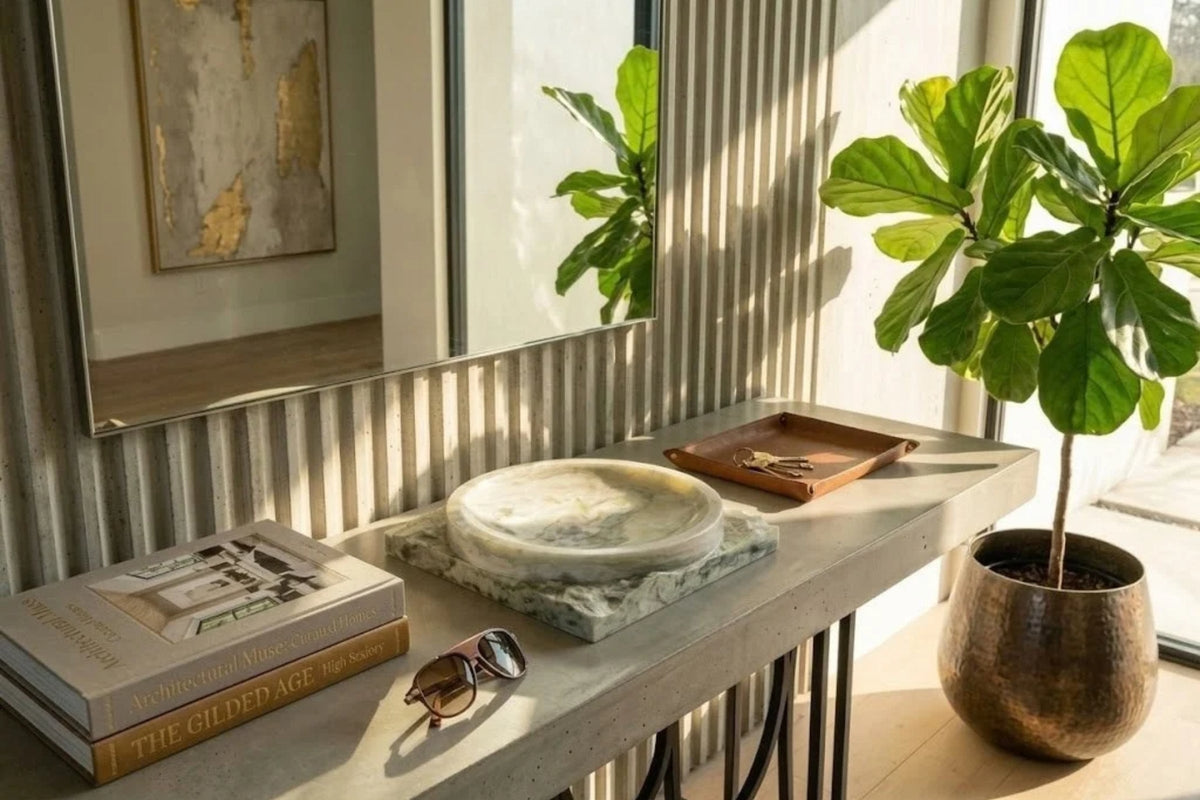
Styling a Side Table with Minimal Elements
A side table is defined not by how much it holds, but by how carefully it is composed. With fewer elements and thoughtful placement, even a small surface can feel balanced, clear, and complete.
How to Create a Minimal Tablescape with Natural Materials
A minimal tablescape is shaped through restraint, where material and placement create quiet balance. With fewer elements and thoughtful spacing, the table feels composed, grounded, and complete.
Marble vs Onyx: Choosing the Right Material for Your Home
Marble and onyx define interiors through contrast—one grounding with weight, the other adding depth through light to create a composed, layered space.
Stone, Wood and Textile: A Study in Material Balance
Material balance is created through contrast—where stone, textiles, and surface interplay to form spaces that feel grounded, layered, and quietly resolved.
How Light Interacts with Natural Materials
Light shapes how materials are experienced—revealing clarity in marble, depth in onyx, and softness in textiles to create a balanced, layered space.
Understanding Surface Finishes: Honed vs Polished
Honed and polished finishes shape how stone is experienced—defining light, texture, and depth to create surfaces that feel either soft and quiet or clear and expressive.
Wool, Cotton & Natural Fibers: Texture and Performance
Wool, cotton, and linen express distinct textures and structures—shaping interiors through softness, resilience, and the quiet evolution of natural fibers.
How to Style a Marble Bowl on a Coffee Table
A marble bowl anchors a surface through weight and form—bringing structure, balance, and quiet presence to a thoughtfully composed coffee table.
The Nature of Travertine and Mineral Veining
Travertine reveals a softer, layered expression of stone—its warmth, porosity, and quiet texture bringing a sense of continuity and ease to interior spaces.
Natural Stone Variations: Why No Two Pieces Are Alike
Natural stone reveals variation through veining, tone, and mineral depth—each piece shaped by time, forming a surface that feels distinct, layered, and quietly enduring.