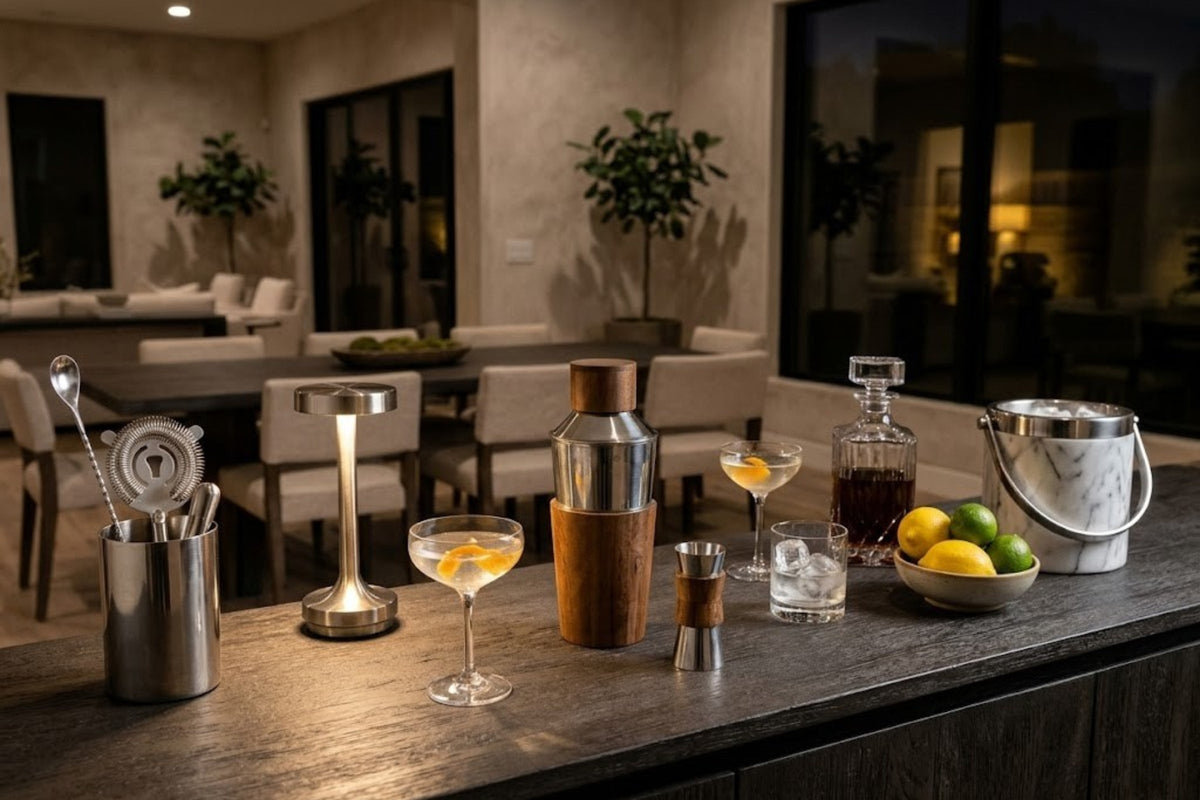
How to Choose a Cocktail Set: Shaker, Size and What Completes It
A cocktail set is a shaker and the few pieces that shaker cannot do without. Choose the shaker first, and the rest of the set follows from it.
A complete cocktail set is a shaker, a jigger, and whatever the shaker leaves out. A cobbler shaker, with its strainer built into the lid, is complete with a jigger alone. A shaker without a built-in strainer needs a separate one, and a household that stirs as often as it shakes adds a long bar spoon. Count the jobs the set covers, not the pieces in the box.
Then decide on size and material. A shaker of about 17 ounces makes one drink at a time, and one of about 24 ounces makes two. Steel inside, where the drink is, takes citrus and repeated washing without reacting. On the outside, a sleeve of wood or a resin body keeps the grip comfortable through a hard shake, where bare steel turns painfully cold within seconds.

The Shaker Decides the Rest
What makes a cocktail set complete?
A set is complete when every step of a drink is covered: measuring, chilling and straining. A cobbler shaker covers straining in its lid, so it needs only a jigger. Any shaker without a built-in strainer needs a separate strainer to be complete.
Sets are sold by piece count, and the count is misleading. A seven-piece set may still be missing the one tool its shaker depends on, while a two-piece set of a cobbler shaker and a double jigger can make every shaken drink there is. The test is to walk a drink through the set: measure with the jigger, shake, then pour. If the pour needs something the set does not include, the set is not complete.
The difference between the two kinds of shaker, and why a professional bar prefers one and a home bar often the other, is set out in how to choose bar tools. Here the question is narrower: what each shaker brings with it. A cobbler brings its strainer and often a cap that doubles as a small measure. A two-piece shaker brings capacity and a seal that breaks with a tap, and asks for a strainer that fits its tin.
Size: One Drink or Two
What size cocktail shaker should I buy?
About 17 ounces for one drink at a time, about 24 ounces for two. A shaker has to hold the ice as well as the drink, and the ice needs room to travel, so a shaker that looks generous is usually filled well past half before any liquid goes in.
Capacity is the specification most often misread. A single cocktail is only three or four ounces of liquid, but it is shaken over a tin packed with ice, and it is the ice moving against itself and the walls that chills and dilutes the drink. Crowd the shaker and the ice cannot move; the drink comes out warm and under-diluted however long it is shaken.
A smaller shaker is not a lesser one. Making drinks one at a time keeps each measured and each poured cold, and a cobbler is generally built for exactly that. A household that makes two of the same drink most evenings is the one that benefits from the larger size. Beyond two, a second shaker is more useful than a larger one.

Material: Where the Cold Goes
Should a cocktail shaker be steel or another material?
Stainless steel wherever the drink touches, because it takes citrus and repeated washing without reacting and it chills fast. On the outside, wood or resin is easier to hold, since bare steel grows painfully cold within seconds. A well-drawn set puts steel where the cold goes and a warmer material where the fingers close.
Steel conducts cold quickly, which is why a steel shaker frosts on the outside a few seconds into shaking. That frost is useful: it is the visible sign the drink is cold. It is also why an all-steel shaker is uncomfortable to hold for the full shake, and why many shakers carry a sleeve, a cap or a body in a material that does not take the cold the same way.
Wood and resin each do that job and each ask for a little care in return. Neither should soak or go in a dishwasher: wood raises its grain and loosens its finish, and resin dulls under heat. The steel parts are the easy ones. Washed in warm, soapy water and dried at once, they stay bright. Wood care is covered in caring for wood and natural materials.
The Cap and the Seal
Why does a cocktail shaker get stuck?
Shaking over ice chills the air trapped inside and the metal around it. The air contracts and the metal tightens, which pulls the pieces together into a seal, and sugar or citrus in the drink helps it hold. A firm tap where the pieces meet, or warm water run over the joint, releases it.
Every shaker seals, and a seal is what keeps the drink in during a hard shake. The trouble comes when it holds afterward. A cobbler is most prone to it, because its cap and lid are small and fit closely; a cap left on while the shaker sits frosted on the counter is the one that will not turn.
Two habits prevent most of it. Open the shaker as soon as the shake ends, before frost builds on the outside. If a cap does stick, hold the body and tap the joint sharply with the heel of the palm, or run warm water over the seam for a few seconds, then twist with a dry cloth for grip. Neither harms a steel shaker, and neither is needed often once the first habit is kept.

Where the Set Lives
Does a cocktail set need a stand?
Only if the tools stay out between uses. A stand keeps each tool upright, together and off a wet counter, and a set that hangs lets wet tools dry in open air. A set that is put away after each use needs a drawer, not a stand.
A shaker and a jigger are easy to put away. A set of five or seven tools is not, and that is where a stand earns its place: it holds the tools at fixed points, so the set is visibly complete and a missing piece is noticed at once. A stone base adds weight that keeps the stand still while a tool is lifted out.
How a set sits within a wider home bar, on a tray, a console or a cart, is a question of arrangement rather than selection, and how to compose a home bar covers it. The selection point is simpler: decide whether the set will be out or away, and buy the stand only if it will be out.

Choosing a Set
For a set complete in two pieces, the Chicago cocktail set is stainless steel and wood: a three-piece cobbler shaker, 9.5 inches tall, with its strainer built into the lid and a wood cap over a steel inner, and a double jigger with steel cups at both ends and wood between them. The wood sits where the fingers close and the steel where the cold goes, base of the shaker and middle of the jigger, and nothing else is needed to shake and pour.
For a set that covers both shaken and stirred drinks, the Charley bar tools are seven pieces in mirror-polished steel and dark-stained wood: a cobbler shaker with a built-in strainer cap, a Hawthorne strainer, a bar spoon, a muddler, a bottle opener, ice tongs and a double jigger, all seated in a two-tier stand of dark iron on scroll legs that lifts the set clear of the counter.
Where the tools themselves should be the object, the Sante bar tools are a jigger, bar spoon, Hawthorne strainer and bottle opener in polished gold-finish steel, each seated upright in a chiseled onyx block banded in charcoal and ochre. Set beside any shaker already in the house, they supply the measure and the strainer it needs.
Quick Answers
What is in a complete cocktail set?
A shaker, a jigger, and anything the shaker leaves out. A cobbler shaker has its strainer built into the lid, so a jigger completes it. A shaker without a built-in strainer needs a separate strainer, and a household that also stirs drinks adds a long bar spoon. Judge a set by the jobs it covers, not its piece count.
What size cocktail shaker should I buy?
About 17 ounces makes one drink at a time and about 24 ounces makes two. The shaker holds the ice as well as the drink, and the ice needs room to move, because that movement is what chills and dilutes the cocktail. A crowded shaker gives a warm, under-diluted drink however long it is shaken.
Does a cocktail set need a separate strainer?
Only if the shaker has no strainer of its own. A cobbler shaker strains through its lid and needs nothing else. A two-piece shaker needs a Hawthorne strainer, which seats in the tin with a coiled spring. A fine mesh strainer held over the glass is an extra, for drinks served without ice.
Why does a cocktail shaker get stuck?
Shaking over ice chills the air inside and the metal around it, so the air contracts and the pieces tighten together into a seal. Sugar and citrus help it hold. Open the shaker as soon as the shake ends; if it sticks, tap the joint firmly with the heel of the palm or run warm water over it.
Should a cocktail shaker be steel or another material?
Stainless steel wherever the drink touches, because it takes citrus and washing without reacting and chills quickly. Bare steel grows painfully cold within seconds, so a sleeve, cap or body in wood or resin makes the shaker easier to hold. Keep wood and resin out of the dishwasher and dry steel at once.
Final Note
A cocktail set is judged on the first drink made with it. If every step from measuring to pouring is covered by what is in the set, and the shaker is comfortable to hold through the whole shake, it is complete, whatever the piece count says.
Choose the shaker first, size it to the number of drinks usually made at once, and let it decide the rest. Two pieces that work together make a better set than seven that need a missing eighth.