Styling with Natural Materials Across Rooms
A continuous language of stone, wood, and textile carried from one room into the next with quiet consistency
A home feels composed not when each room is styled independently, but when materials move seamlessly between spaces.
Marble, onyx, wood, wool, cotton, and linen create a shared foundation—allowing each room to feel distinct, yet connected through a common material language.
Understanding Material Continuity Between Rooms
What creates cohesion across different rooms?
Cohesion is created through repetition of materials from one room to the next.
This is a question of what happens at the threshold rather than within four walls. Composing a single room around one material palette is a narrower exercise, covered in creating cohesion through materials in a room. Here the concern is what carries over when you leave one space and enter another.
When similar materials appear across spaces—a green onyx tray with brass handles in the living room, a stone accent in the bath, a wool rug in the bedroom—the home begins to feel unified without appearing uniform.
This continuity allows movement between rooms to feel natural.
Using Stone as a Unifying Element
How can stone be used across multiple spaces?
Stone introduces consistency through presence.
A ridged white marble bowl on a coffee table, a concave onyx tray in pecan or laurel green on a console, or stone objects that carry a shared material presence across rooms create a quiet continuity.
While each piece differs in form and scale, the material remains constant, creating subtle connection from one room to the next.
Balancing with Wood and Warmth
What role does wood play in material continuity?
Wood introduces warmth between spaces.
Placed alongside stone, wooden surfaces soften the composition—whether through a tray, furniture, or surrounding elements. Its grain and tone create a transition between rooms, preventing the space from feeling overly structured.
This balance allows materials to feel layered rather than repetitive, and the proportions of it are set out in stone, wood, and textile material balance.

Softening with Textiles
How do textiles connect different rooms?
Textiles introduce continuity through softness.
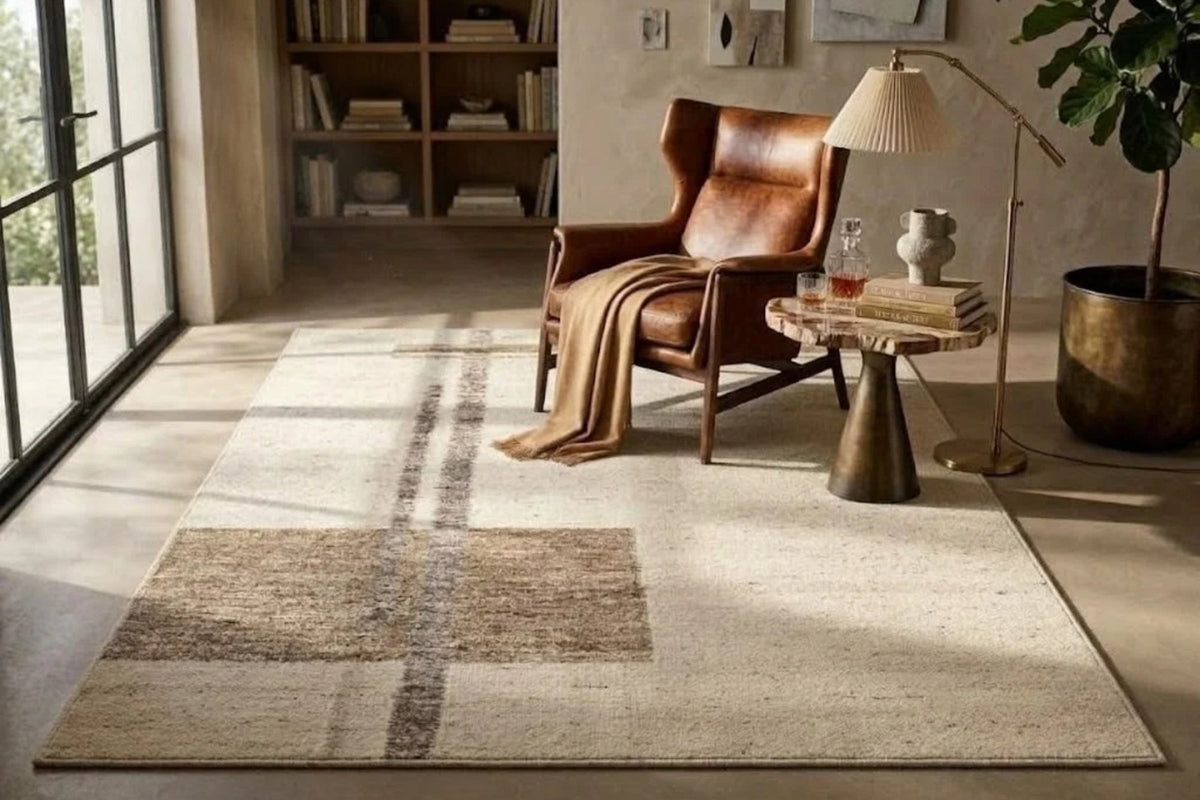
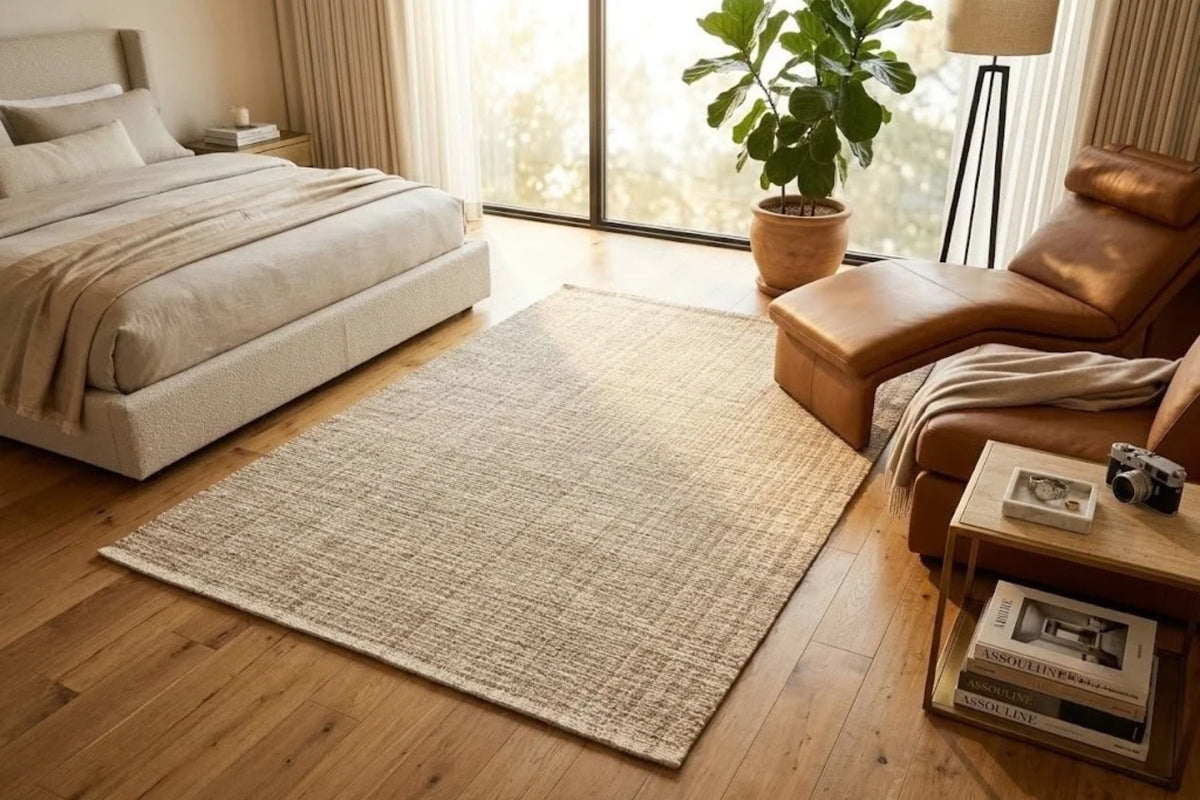
Wool rugs, cotton pillows, and linen textiles carry a consistent tactile presence. While their forms change—from rugs in living areas to textiles in bedrooms—they maintain a shared material rhythm.
This creates cohesion through texture rather than exact repetition.
Adapting Scale to Each Room
Should materials be used the same way in every room?
Scale should adjust to the space.
A large marble bowl may anchor a living room, while a smaller stone tray suits a bedside or bath. A full rug defines a seating area, while a textile layer softens a smaller surface.
The material remains consistent, but its expression shifts with context.
Maintaining a Consistent Palette
How important is color in material continuity?
Tone reinforces cohesion.
Neutral and mineral palettes—ivory, beige, soft grays, and warm earth tones—allow materials to move across rooms without contrast. This creates a quiet visual flow from one space to another.
Consistency in tone supports consistency in material.
Spacing and Restraint Across Rooms
How do you prevent repetition from feeling excessive?
Restraint maintains balance.
Materials should be repeated, but not overused within a single space. Each room should hold a few defined elements, allowing the overall home to feel cohesive without appearing styled to excess.
Absence is as important as presence.

Creating Variation Within Continuity
How do you keep rooms from feeling identical?
Variation emerges through form and placement.
While materials remain consistent, their forms differ—bowls, trays, rugs, or textiles—creating distinction within each room. Placement and scale further differentiate spaces while maintaining a shared foundation.
The stone itself contributes here, since natural stone variations make each piece unique—two pieces of the same material will never read identically across two rooms.
Applying Material Continuity Across the Home
Where should this approach be applied?
Material continuity extends across all spaces.
Living areas, bedrooms, dining settings, and bath spaces can all carry the same materials in different forms. This creates a home that feels connected without requiring uniform styling.
The result is a quiet, consistent rhythm throughout.
Quick Answers
How do you create a cohesive look across different rooms?
Carry the same materials from one room into the next while letting form and scale change. Stone in a living area, a stone accent in the bath, and wool underfoot in a bedroom read as one language. Continuity between rooms is what makes movement through a home feel resolved.
What materials work well for whole-home styling?
Natural materials such as stone, wood, wool, cotton, and linen create a consistent foundation across spaces. They share a neutral, mineral range that holds together without matching, so each room can differ in form while the palette stays constant from one threshold to the next.
Should every room use the same decor pieces?
No. Materials should remain consistent while forms and placement vary, so each room keeps its own identity. A large bowl anchors a living room, while a smaller tray suits a bedside. Repeating the exact object across rooms flattens the distinction between them.
How do you avoid repetition when using the same materials?
Vary scale, placement, and object type while holding the material palette constant. A bowl in one room and a tray in another share stone without repeating a form. Restraint within each space matters as much, since a material overused in one room stops reading as continuity.
Does color matter in material continuity?
Yes. Neutral and mineral tones let materials move between rooms without contrast interrupting the transition. Ivory, beige, soft gray, and warm earth tones share enough range to stay related across spaces. Consistency in tone is what supports consistency in material.
Final Note
A home is not a collection of separate rooms—it is a continuous composition.
When materials move quietly from one space to another, they create a sense of connection—where each room feels distinct, yet part of a greater whole.