Creating Cohesion Through Materials in a Room
A unified composition where material, tone, and texture come together to create a space that feels considered and complete
A room feels resolved not when every object matches, but when materials relate to one another with quiet consistency.
Stone, wood, wool, cotton, and linen each carry distinct presence. When brought together with intention, they form a composition that feels cohesive without becoming uniform.
Understanding Material Cohesion
What creates cohesion within a room?
Cohesion emerges through repetition and balance.
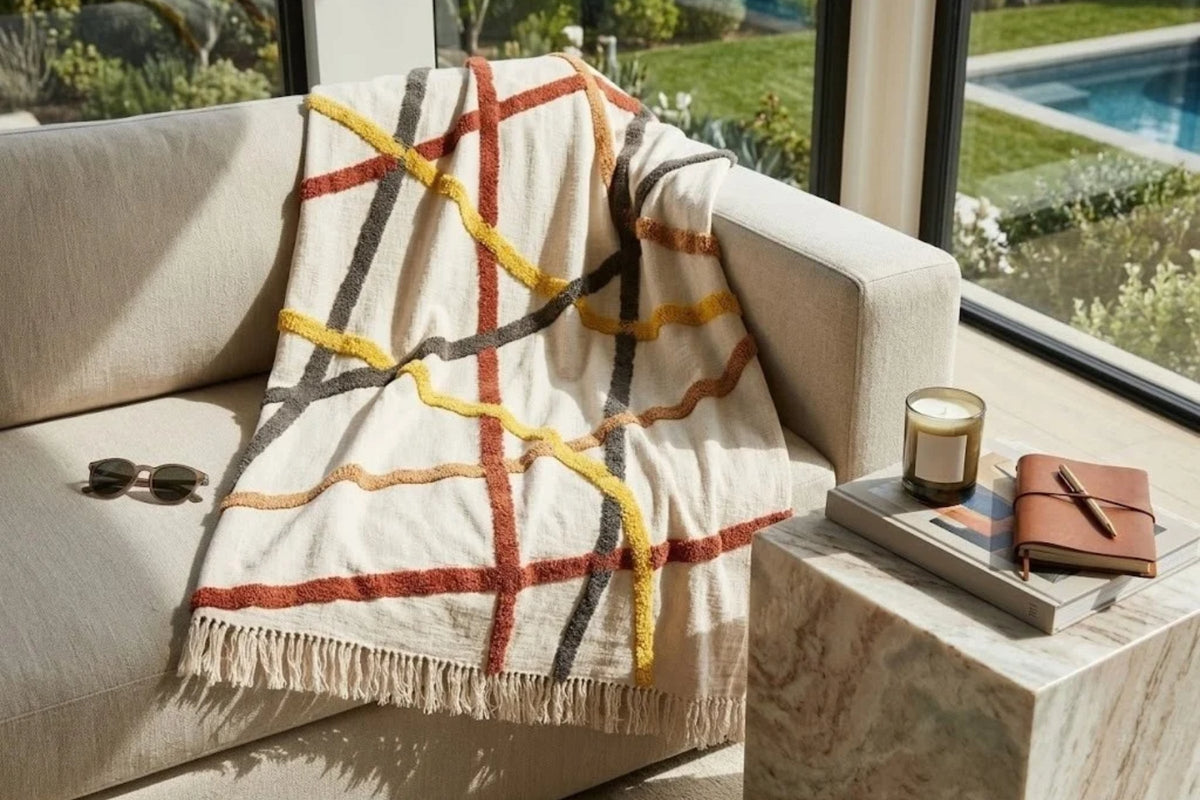
When similar materials or tones appear across different elements within one space—an ivory onyx tray honed to a beveled edge, a wooden surface, a wool rug—the room begins to feel connected.
This connection is subtle, yet essential.
What follows concerns a single room—one seating group, one rug, one set of surfaces held in relation to each other. Carrying a material language from one room to the next, across a whole home, is a different problem and is treated separately in styling natural materials across rooms.

Starting with a Primary Material
How should a material palette begin?
A single material often defines the foundation.
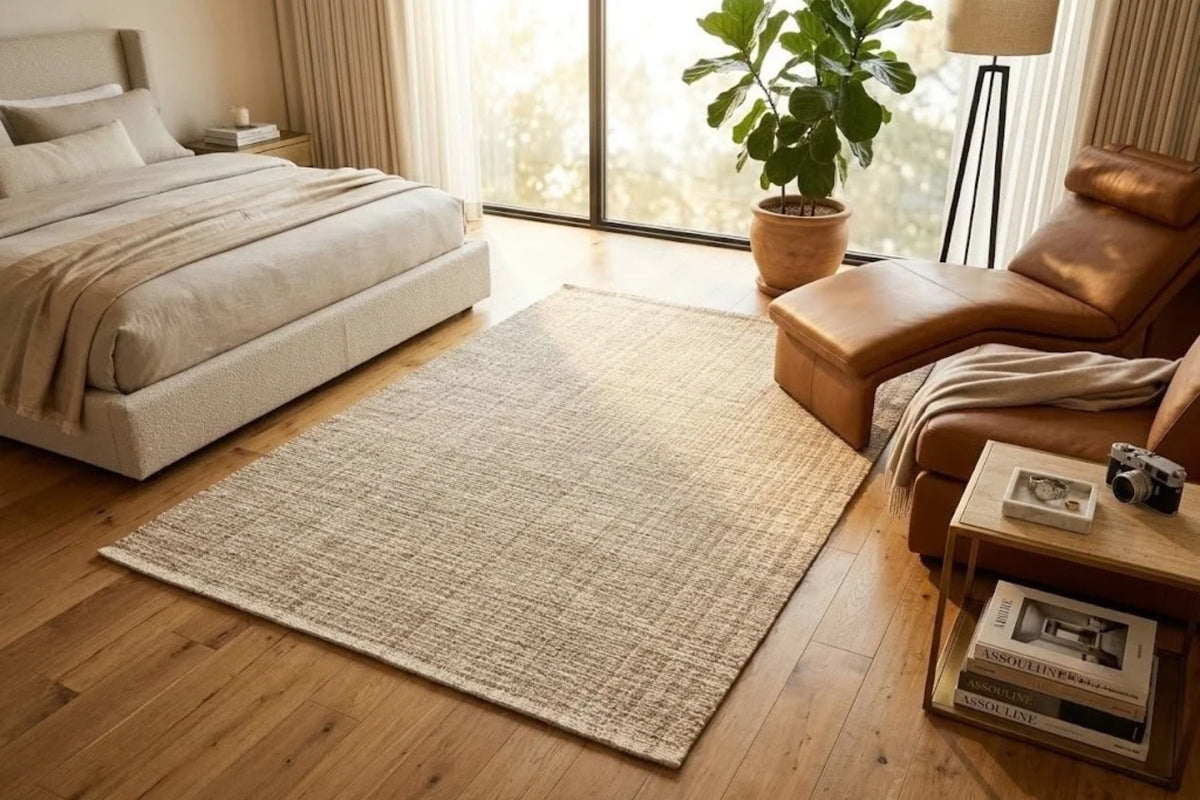
A stone element on a coffee table, a wool rug beneath seating, or a wooden surface can establish the tone of the room. This primary material anchors the space, guiding how other materials are introduced.
It provides a point of reference for the entire composition.
Introducing Complementary Materials
How should additional materials be layered?
Materials should complement rather than compete.
Stone may be paired with wood to introduce warmth, while textiles soften both through texture. These combinations create contrast without disruption, allowing each material to remain distinct.
The ratio between the three is its own question, set out in the balance between stone, wood, and textile. Within a single room, balance is achieved through restraint.
Maintaining a Consistent Palette
Does color influence material cohesion?
Tone supports material continuity.
Neutral and mineral tones—ivory, beige, soft gray, and warm earth hues—allow different materials to sit together naturally. Strong contrast or unrelated color palettes may disrupt the sense of cohesion.
A consistent palette allows variation without fragmentation.

Texture as a Connecting Element
How does texture contribute to cohesion?
Texture creates depth across materials.
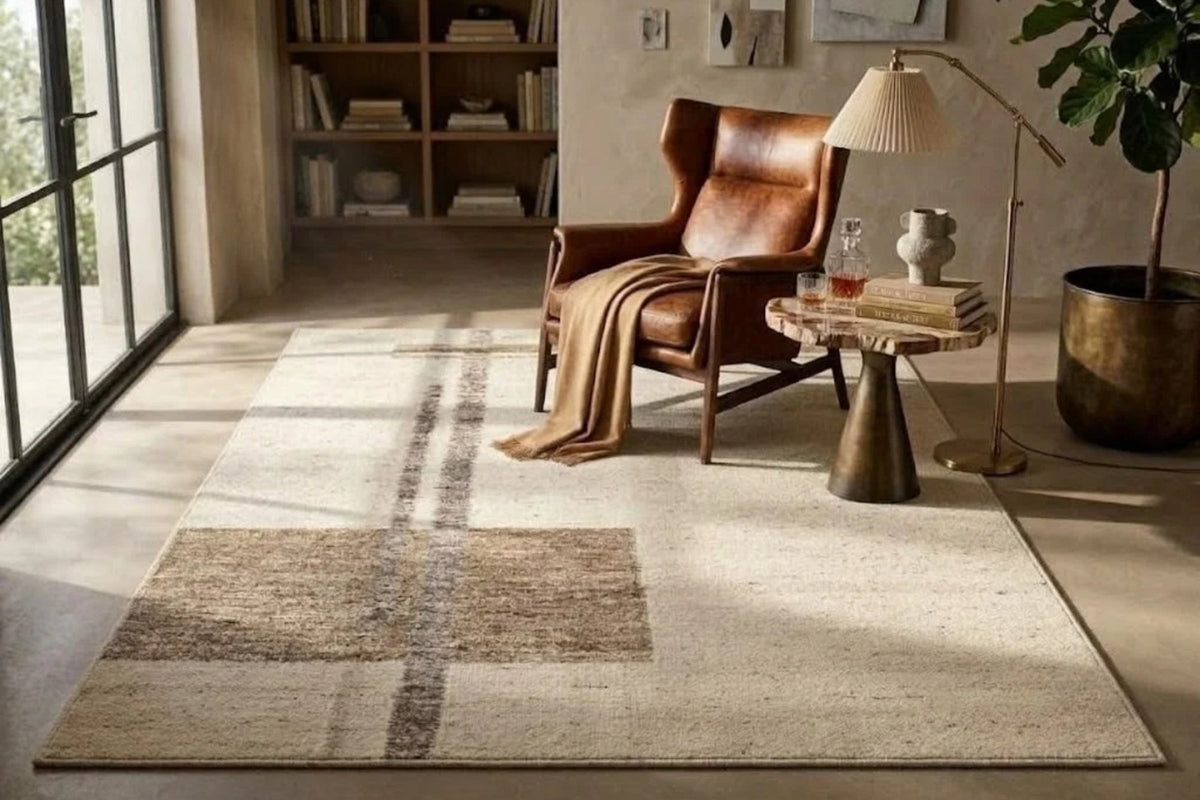
Polished stone, honed stone, grained wood, and woven textiles introduce variation while maintaining balance. These differences enrich the composition, allowing the room to feel layered rather than flat.
Texture connects materials without requiring sameness.
Distribution of Materials Across the Room
Where should materials be placed within the room?
Materials should be distributed, not concentrated.
A stone object on a coffee table may be echoed by a smaller stone accent on a console across the same room. A textile element may appear in both seating and surrounding surfaces. This repetition ensures the material feels integrated throughout the space.
Even distribution creates continuity.
Balancing Presence and Absence
Can too much material repetition disrupt cohesion?
Excess can reduce clarity.
Repeating a material too frequently within a single space may feel heavy or overly deliberate. Allowing areas of absence ensures that each material remains visible and distinct.
Cohesion relies on measured use.

Scale and Proportion in Material Use
Does scale affect material balance?
Scale shapes perception.
Larger materials—such as rugs or tables—define the foundation, while smaller objects reinforce the composition. Proportion in home decor governs how these elements sit against one another.
Each material should feel appropriate to its placement.
Avoiding Visual Fragmentation
What disrupts cohesion in a room?
Unrelated materials and excessive variation.
Introducing too many contrasting finishes or tones can fragment the composition. Similarly, placing materials without relation to one another may cause the space to feel disconnected.
Clarity comes from alignment, not variety.
Applying Cohesion Across the Room
Where should material cohesion be applied?
Across every surface in the room.
From the coffee table to the console, the rug to the textiles, each surface contributes to the overall composition. When materials are aligned across these elements, the room feels complete.
Cohesion is not confined to one surface—it extends across the whole room.
Quick Answers
How do you create a cohesive look in a room?
Within one room, work from a single anchoring material and let it recur at two or three points—a stone object, a wooden surface, a wool rug. Hold the tones close, vary the texture, and leave gaps between repetitions so each material stays legible rather than insistent.
What materials work well together in interior styling?
Stone, wood, and natural fiber read well together because each carries a different density of surface. Polished or honed stone against grained wood against a woven textile gives variation without contrast. Keep the palette to three materials in one room and the composition stays readable.
Should all decor materials match in a room?
No. Matching flattens a room; relating holds it together. Two stones of the same family, a wood that shares their warmth, a textile in a near tone—these relate without repeating. The aim is a shared register across materials, not a single finish applied everywhere.
How many materials should be used in one room?
Three carries most rooms: one stone, one wood, one fiber. A fourth is possible when it sits close in tone to something already present. Past that, the eye stops reading relationships and starts reading a collection of separate things, and the room loses its center.
Does texture help create cohesion?
Yes. Texture is what lets a limited palette stay interesting. A honed stone surface, a polished one, a grained board and a looped wool pile all sit in the same tonal range while catching light differently, so the room reads layered rather than flat or repetitive.
Final Note
Cohesion is not created through repetition alone, but through relationship.
When materials are chosen and placed with intention, they settle into a shared language—forming a room that feels unified, balanced, and quietly complete.