Layering Textiles: Pillows, Throws and Rugs
A softened composition where fabric, texture, and layering create depth without excess
Textiles introduce a different kind of presence within a space—one that is shaped by softness, movement, and touch rather than weight or structure.
When layered with restraint, pillows, throws, and rugs create a composition that feels grounded yet fluid—adding depth without disrupting clarity.
Understanding Textile Layering
What does it mean to layer textiles?
Layering textiles is the arrangement of soft elements across different surfaces and levels.
A rug defines the base, pillows introduce form, and throws add movement. Together, they create a sense of depth that feels natural rather than constructed.
The goal is cohesion, not accumulation.
Starting with a Foundation Rug
What role does a rug play in textile layering?
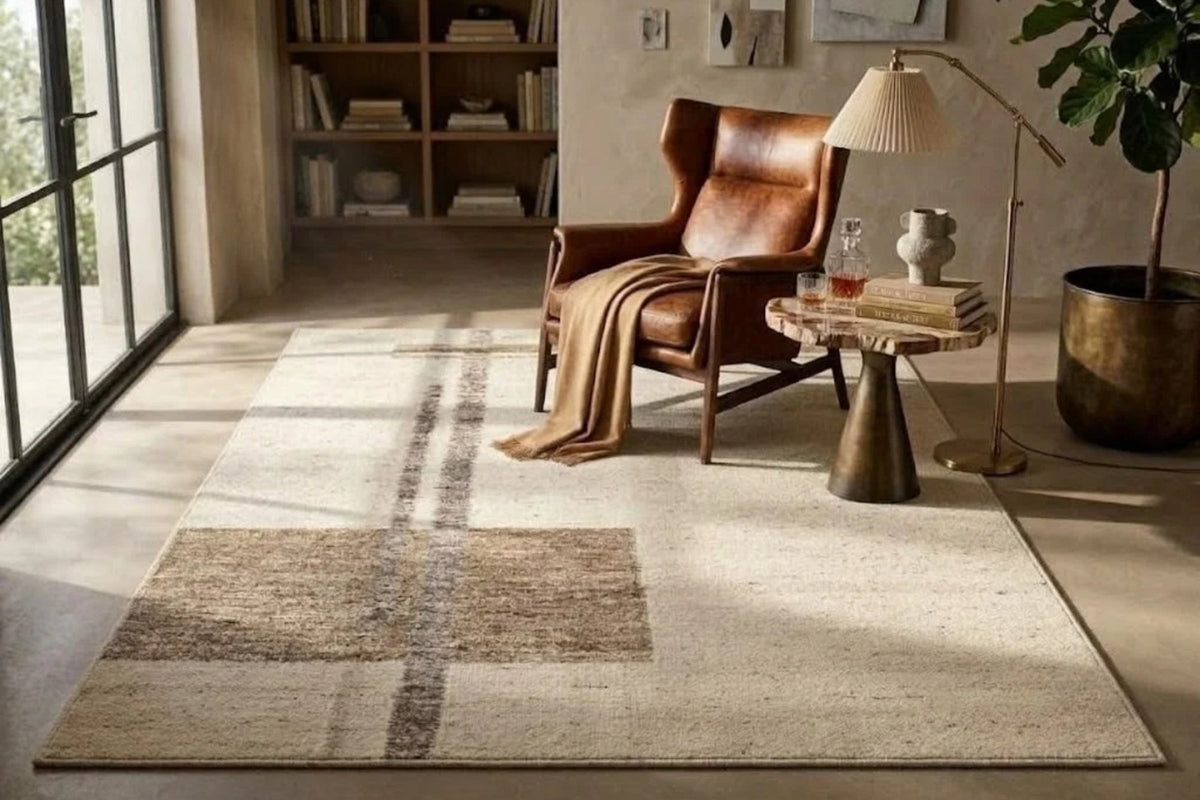
The rug establishes the base layer.
A textural rug that grounds the space with quiet structure defines the area and anchors furniture. Its surface absorbs movement and softens the setting, creating a foundation for additional textile layers. A neutral rug gives the layers above it the widest tonal range to work within.
Without this base, layering may feel disconnected.
Introducing Pillows as Form
How should pillows be layered?
Pillows introduce structure within softness.
Placed on seating or bedding, pillows define shape and proportion. Variation in size and subtle differences in texture create depth while maintaining balance.
Too many pillows can disrupt clarity, while too few may feel incomplete. A restrained grouping often feels most composed.

Adding Throws for Movement
What is the purpose of a throw in layering?
Throws introduce fluidity.
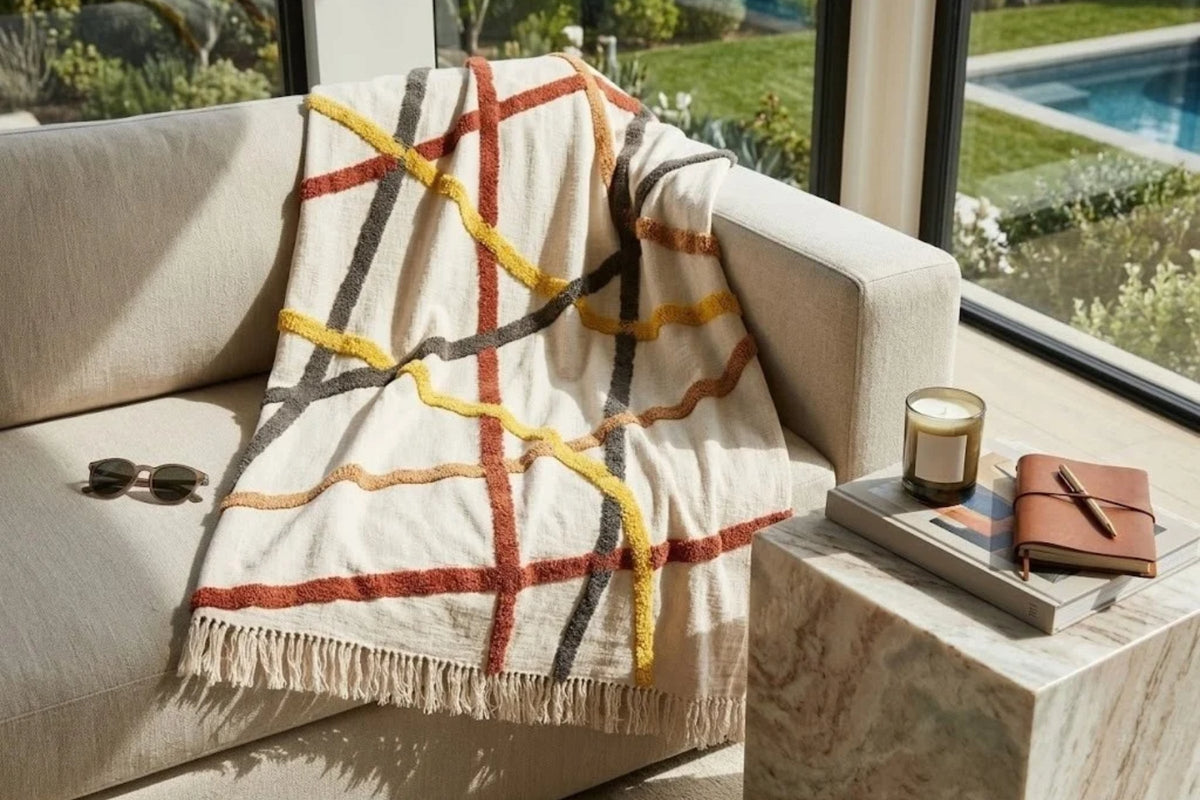
Draped across a sofa, chair, or bed, a throw softens the edges of structured elements. Its placement should feel natural—loosely folded or gently placed rather than arranged with precision.
This creates a sense of ease within the composition.
Balancing Texture Across Layers
How do different textile textures work together?
Texture creates variation without contrast.
Wool introduces density and depth, cotton offers a smoother surface, and linen carries a more open, relaxed weave. Combining these textures allows each layer to remain distinct while contributing to a unified whole. How each natural fiber performs in use is worth knowing before the layers are set.
The variation should feel subtle rather than pronounced.
Maintaining a Consistent Palette
Does color matter in textile layering?
Tone supports cohesion.
Neutral and mineral palettes—soft ivories, warm beiges, and muted grays—allow textiles to layer naturally. Strong contrast may disrupt the softness that textiles are meant to introduce.
Consistency in tone creates visual calm.
Spacing and Proportion
How much layering is enough?
Restraint defines balance.
Each textile should remain visible and distinct. Overlapping too many layers can reduce clarity, while minimal layering allows each element to hold presence.
Proportion should respond to the size of the surface—larger spaces can hold slightly more variation, while smaller ones require restraint.

Placement Across Different Spaces
Where should textiles be layered?
Textile layering extends across multiple settings.
In living spaces, rugs and pillows define seating. In bedrooms, pillows and throws create softness across the bed—an arrangement with its own order, set out in styling a bed with pillows and throws. In transitional areas, a single textile layer may be sufficient to introduce warmth.
Each placement reflects the function of the space.
Avoiding Over-Layering
What disrupts textile balance?
Excess and inconsistency.
Too many textiles, varied without cohesion, can create visual noise. Similarly, overly structured placement may remove the natural softness that textiles bring.
Layering should feel effortless rather than arranged. Keeping the layers looking that way is a matter of routine care for covers and throws rather than of styling.
Quick Answers
How do you layer pillows and throws on a sofa?
Set two or three pillows for structure, varying size rather than pattern, and add one throw loosely across an arm or a corner. Keep every layer in a close tonal range so the differences read as texture. A sofa that looks arranged has usually had one layer too many added.
What is the role of a rug in textile styling?
The rug is the base layer and the only one that sets dimensions. It fixes where the furniture sits, absorbs sound and movement, and establishes the tonal range every pillow and throw afterward answers to. Layering without one tends to float, because nothing holds the arrangement to the floor.
How many pillows should be used for a balanced look?
Two or three on a standard sofa, four across a larger sectional, and two at the head of a bed before any decorative layer. Vary the dimensions rather than the pattern. Beyond that count the seat stops reading as somewhere to sit and starts reading as a display.
Should throws be folded or draped?
Draped. A loose drape over one arm, or folded once and laid across a corner, reads as a textile in use. A sharp fold squared to the seat reads as staging. Let the weave carry its own weight and fall where it falls; wool and cotton both hold a line without help.
Can different textile materials be combined?
Yes, and the combination is what gives a limited palette depth. Wool brings density, cotton a flatter and smoother face, linen an open weave that creases as it is used. Hold them in one tonal range and the difference registers as texture rather than as contrast between materials.
Final Note
Textiles do not define a space through structure—they shape it through softness.
When layered with restraint, they introduce depth, warmth, and movement—creating a composition that feels both grounded and quietly evolving.