How to Style a Dining Table for Everyday Use
A composed surface where function, material, and restraint shape the rhythm of daily use
A dining table is not only for occasion—it is part of everyday living. Its surface shifts between use and stillness, holding objects briefly or remaining quietly open.
When styled with intention, it does not feel decorated. It feels prepared—balanced between presence and purpose.
Understanding Everyday Table Composition
How should a dining table be styled for daily use?
A dining table should remain open, with a single defined element.
Unlike decorative surfaces, it must allow for movement—meals, placement, and clearing. Styling should therefore be minimal, centered, and easily adaptable. A minimal tablescape in natural materials works on the same principle at a smaller scale.
Clarity is more important than completeness.
Starting with a Central Element
What should be placed at the center of a dining table?
A single object creates focus.
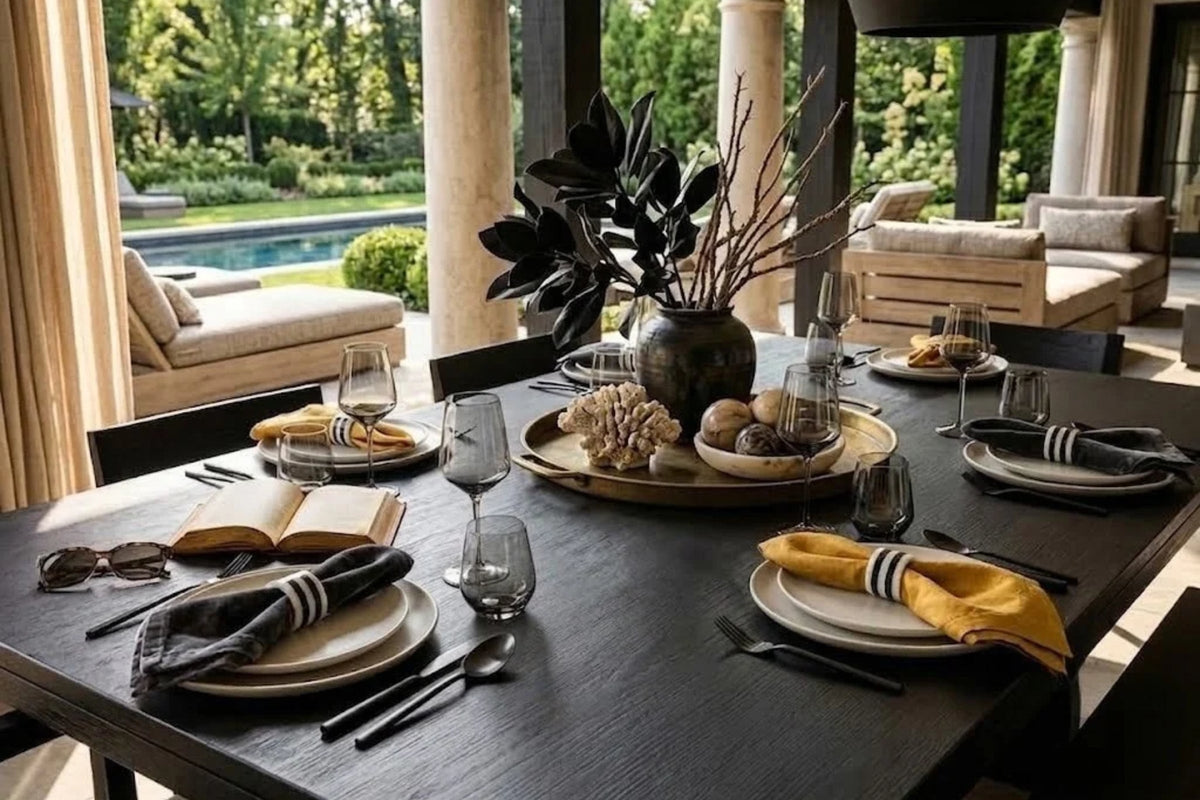
A stone bowl or low tray that anchors the table with quiet presence defines the surface without occupying it fully, allowing space to remain around it.
The table feels grounded, yet open.
Keeping the Surface Open
How much should be placed on a dining table?
Less is essential.
Everyday dining requires flexibility. A single object—or at most a small grouping—ensures the table can transition easily between use and rest.
Overfilling the surface disrupts both function and balance.

Using Serveware as Part of the Composition
Can serveware be part of everyday styling?
Serveware can remain in place, within one limit.
A Verde Guatemala marble bowl holding fruit, or a tray used for light serving, can remain on the table between uses. These elements serve both functional and visual roles without requiring adjustment.
The limit is acid. Marble and onyx are both calcium carbonate, and citrus, wine, and vinegar etch the surface on contact rather than over time—a dulled patch, not a gradual change. Apples, walnuts, and stone fruit can sit on stone indefinitely; a halved lemon or lime needs a liner or a different bowl, and any spill should be wiped immediately rather than at the end of the day. Marble and food safety sets out what the stone will and will not take.
Within that limit, they become part of the table's daily rhythm.
Scale and Proportion
How should object size relate to the table?
Scale should feel proportionate to the surface.
A larger dining table can hold a wider bowl or tray, while smaller tables require more contained elements. The object should anchor the surface without dominating it.
Balance is created through proportion.

Material and Presence
Which materials suit a dining table?
Material defines the tone of the table.
Stone—marble or onyx, which are the same mineral cut at close to the same density—introduces weight and stillness. Wood adds warmth, while textiles may be used sparingly to soften the setting. Choosing serveware for everyday use covers how each behaves once the table is actually in service.
These materials should remain limited, allowing the table to feel composed rather than layered.
Placement and Alignment
Should objects be centered or offset?
Placement depends on the table's use.
A central placement creates symmetry and clarity, often suited for everyday styling. Slightly offset placement may be used when the table serves multiple functions or is accessed from one side more frequently.
Alignment should feel natural to the space.

Allowing for Transition
How should styling adapt during meals?
Styling should be easy to move.
Objects placed on the table should be easily lifted or repositioned, allowing the surface to transition seamlessly into use. This ensures that styling never interferes with function.
Flexibility defines everyday composition.
Avoiding Over-Styling
What disrupts a dining table arrangement?
Excess and permanence.
Multiple objects, complex arrangements, or fixed decor can restrict the table's function. A dining surface should never feel fully occupied.
Restraint maintains both usability and clarity.
Applying Everyday Styling Across Dining Spaces
Does this approach work for all dining areas?
Yes, across scales and settings.
Whether a large dining table or a smaller breakfast surface, the principle remains consistent—one central element, open space, and adaptability for use.
The table remains both functional and composed.
Quick Answers
How do you style a dining table for everyday use?
Set one object at the center—a stone bowl or a low tray—and leave the rest of the surface clear. Everyday use means the table has to empty and refill several times a day, so whatever sits on it should lift with one hand and return without rearrangement.
What should be placed in the center of a dining table?
A single wide bowl, a low tray, or a pair of candle holders—one element, sized to the table rather than to the room. The object should read from a seated eye level, which is lower than most people style for, and should not block a sightline across the table.
How many items should be on a dining table daily?
One, or two if they share a material. A bowl and a spoon rest, a tray and a candle. Each additional object has to be moved before the table can be used, and the count that survives a week of actual meals is usually lower than the count that looks right empty.
Can serveware be left on a dining table?
Yes, with one caution. Marble and onyx are calcium carbonate, and citrus, wine, and vinegar etch them on contact, not over time. A stone bowl can hold apples or walnuts indefinitely; lemons and limes need a liner or a different bowl. Wipe any spill immediately rather than later.
Should dining tables always be decorated?
No. A dining table is a working surface first, and an empty one is a finished one. What it needs is a single element that can stay through a meal or leave in a second—not an arrangement that has to be dismantled and rebuilt every time someone sits down to eat.
Final Note
A dining table does not need decoration—it needs clarity.
When styled with restraint, it remains open to use while holding a quiet presence—shaped by material, proportion, and the rhythm of everyday living.