How to Layer Decorative Objects Without Clutter
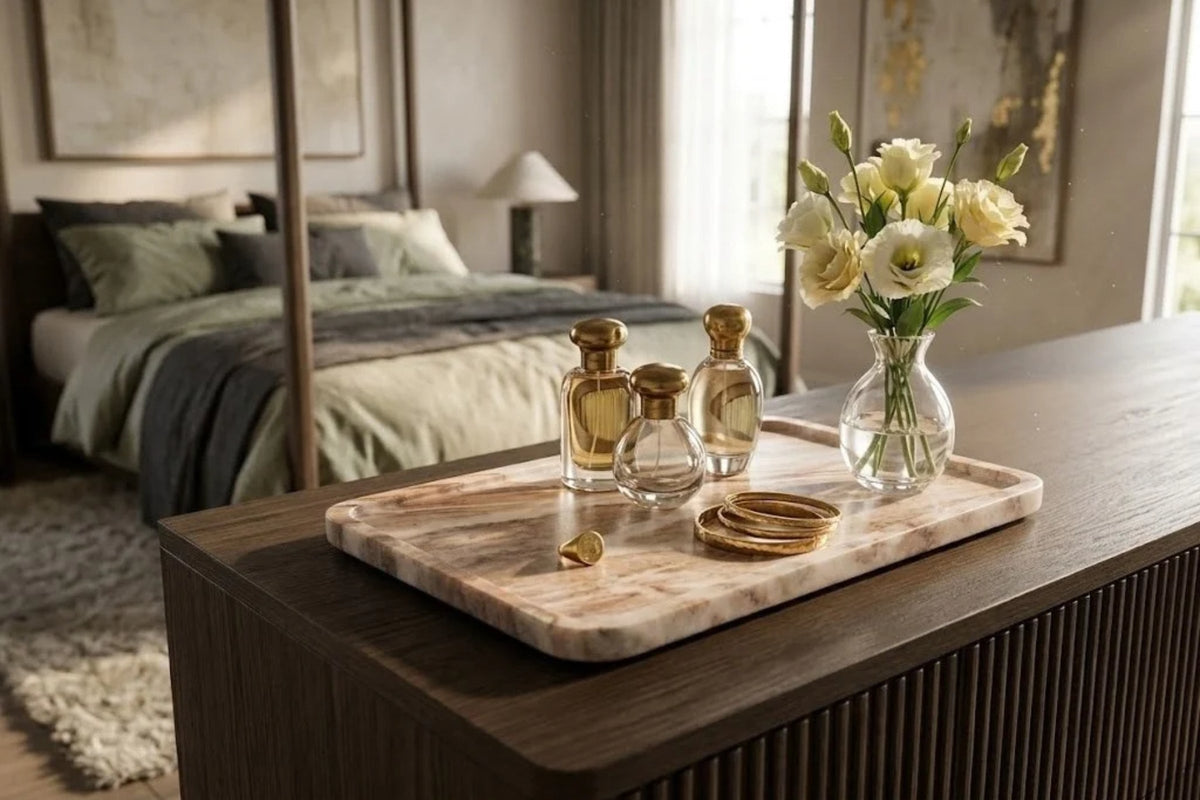
A measured composition where objects are layered with restraint, allowing space, material, and proportion to remain visible
Layering is often misunderstood as addition. In refined spaces, it is not about placing more objects, but about arranging fewer elements with clarity.
Each object contributes to a composition that feels complete without becoming crowded—where presence is shaped through balance rather than accumulation.
Understanding Layering in Interior Styling
What does it mean to layer decorative objects?
Layering is the arrangement of objects across levels, materials, and positions.
It introduces depth and variation, allowing a surface to feel composed rather than flat. This is achieved through height, placement, and subtle contrast.
The goal is not density, but dimension.
Starting with a Grounding Element
What is the foundation of a layered composition?
A single grounding object establishes the base.
A stone bowl that anchors the composition or a honed onyx tray creates a defined starting point, holding the arrangement together while allowing additional objects to layer with intention.
Without this base, layering may feel scattered. Given enough clear space, that grounding object also does the work described in creating quiet focal points in a room.
Introducing a Secondary Layer
How should additional elements be added?
Layering progresses through restraint.
A book, textile, or smaller object may be placed adjacent to or slightly beneath the primary element, creating a second level. This introduces variation without disrupting clarity.
Each layer should remain visible and distinct.
Using Height to Create Depth
Does height play a role in layering?
Height introduces vertical dimension.
A single raised object—a candle, vessel, or sculptural form—adds contrast against lower elements. This vertical presence completes the composition without requiring additional objects.
Too many raised elements can disrupt balance.
Maintaining Spacing Between Objects
How do you prevent clutter when layering?
Spacing ensures clarity.
Each object should have space around it, allowing the surface beneath to remain visible. When objects overlap excessively or sit too closely, the composition may feel compressed.
Negative space is part of the arrangement.
Material Contrast Without Excess
How should materials be combined?
Material contrast should remain controlled.
A stone tray paired with a ceramic object or a linen textile introduces variation in texture and tone. Stone objects that bring structure and depth hold the arrangement, while lighter materials soften it.
Limiting materials maintains cohesion.
Proportion and Surface Size
Does surface size affect layering?
Layering must respond to scale.
Larger surfaces can accommodate slightly more variation, while smaller surfaces require fewer elements. The number of objects should always remain proportionate to the space available.
Restraint increases with smaller scale, which is where understanding scale in decorative objects becomes the deciding factor.
Avoiding Common Layering Mistakes
What leads to visual clutter?
Excess and inconsistency.
Too many objects, varied materials without cohesion, or overlapping layers can create confusion rather than depth. Similarly, objects of equal size may lack hierarchy, making the composition feel flat.
Layering should create order, not complexity.
Applying Layering Across Different Surfaces
Where can layering be used effectively?
Layering applies across all surfaces.
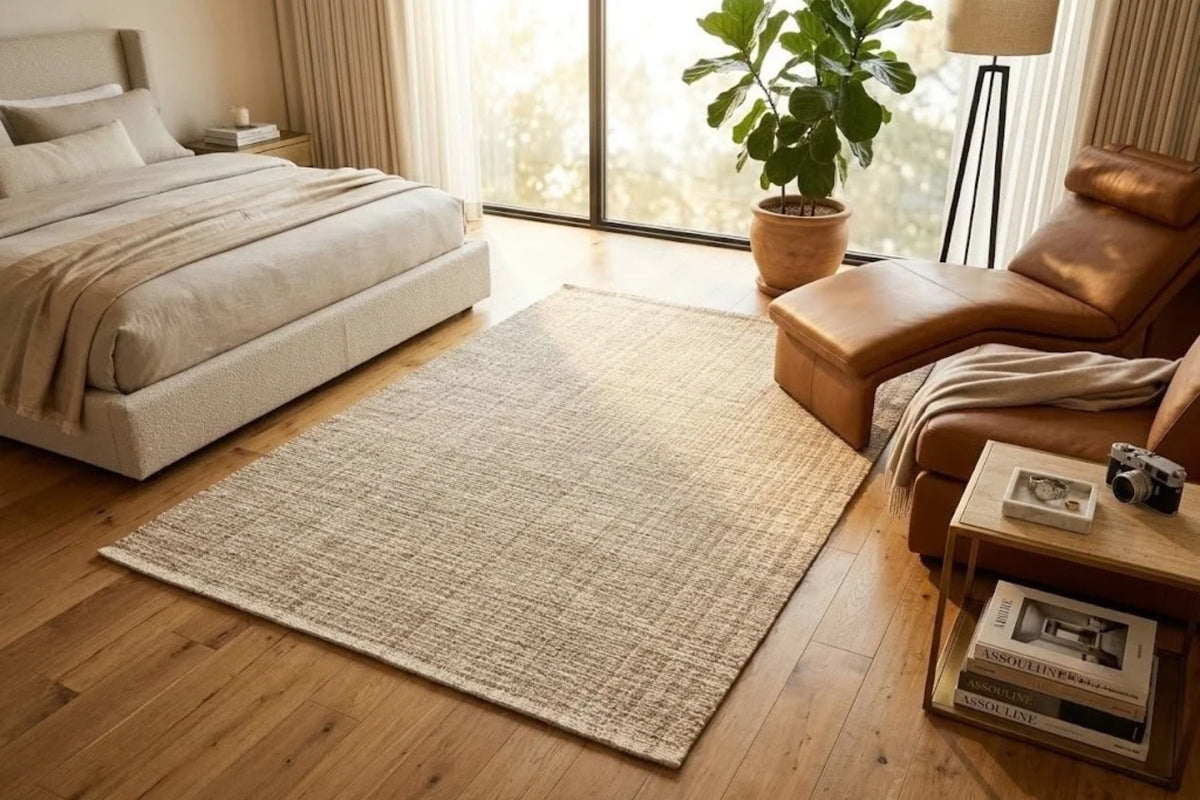
On a coffee table, it creates a central composition. On a console, it defines a contained arrangement. On a side table, it remains minimal—often limited to two or three elements. Vertically, the method carries over to styling open shelves with objects and space.
The principle remains consistent, while the scale adjusts.
Quick Answers
How do you layer decor without making it look cluttered?
Start with a single grounding object, add one or two supporting elements, and keep visible space between them. Layering works through depth rather than density, so each piece should stay distinct. When objects overlap heavily or crowd together, the surface reads as compressed rather than composed.
What objects work well for layering?
Stone objects bring structure and depth, and trays, books, and sculptural forms build dimension around them when used with restraint. A tray contains the arrangement, a book introduces a second level, and one raised form completes it. Limiting materials keeps the grouping cohesive.
How many items should be used in layering?
Two to four elements are generally sufficient for a balanced composition. The number should follow the surface, since a console carries more than a side table. What matters more than the count is that each object keeps space around it and remains individually legible.
Does layering require different heights?
Yes, variation in height creates depth, though it should remain subtle. A single raised object set against lower elements is usually enough to give the arrangement dimension. Several tall pieces on one surface compete rather than contrast, and the sense of hierarchy is lost.
Can layering be applied to small surfaces?
Yes, though it should be more restrained, often limited to two elements. Restraint increases as scale decreases, so a side table may hold only an anchor and one supporting piece. The principle stays the same across surfaces while the number of objects adjusts.
Final Note
Layering is not about adding—it is about arranging.
When objects are placed with intention and space is allowed to remain, a surface gains depth without losing clarity—feeling composed, balanced, and quietly complete.