Choosing Objects That Age Well Over Time
A considered selection of materials and forms that hold up as they are lived with
Not all objects remain the same over time. Some fail, some improve, and some simply require maintenance to stay as they were.
Choosing objects that age well is not about preservation, and it is not about letting everything go. It is about knowing which of those three applies to each material before it is bought.
Understanding How Objects Age
What does it mean for an object to age well?
It means the wear it takes is either an improvement or a repair.
Aging well does not exempt a material from wear. It means the wear is one of two kinds. Either it improves the object, as patina does on bronze or absorbed oil does on wood, or it is reversible, as a dulled stone surface is by re-honing and resealing. Materials that age badly are those where wear is neither: it accumulates, it cannot be undone, and it was never an improvement.
How natural materials age with use covers the mechanism material by material, and what to expect from natural materials sets the baseline before purchase. This piece is about selection.
The Role of Material
Which materials age well in home decor?
The division is not natural against synthetic. It is patina against wear.
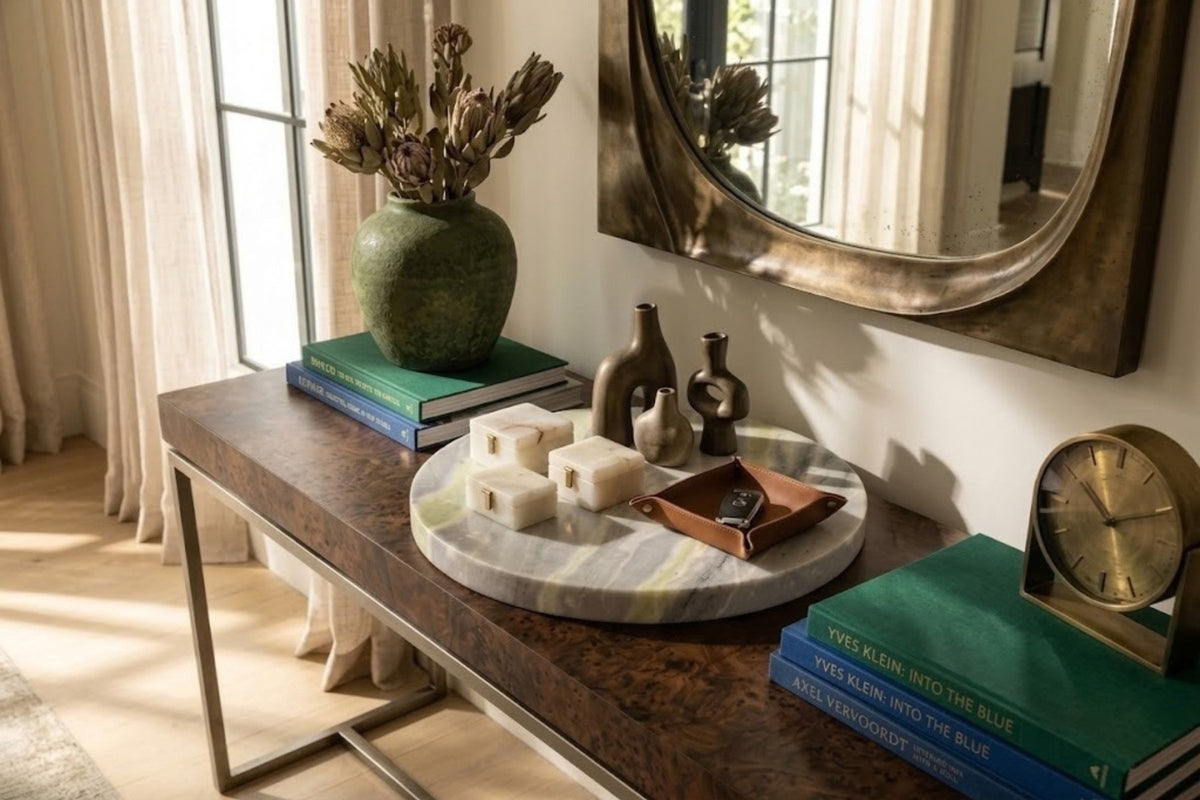
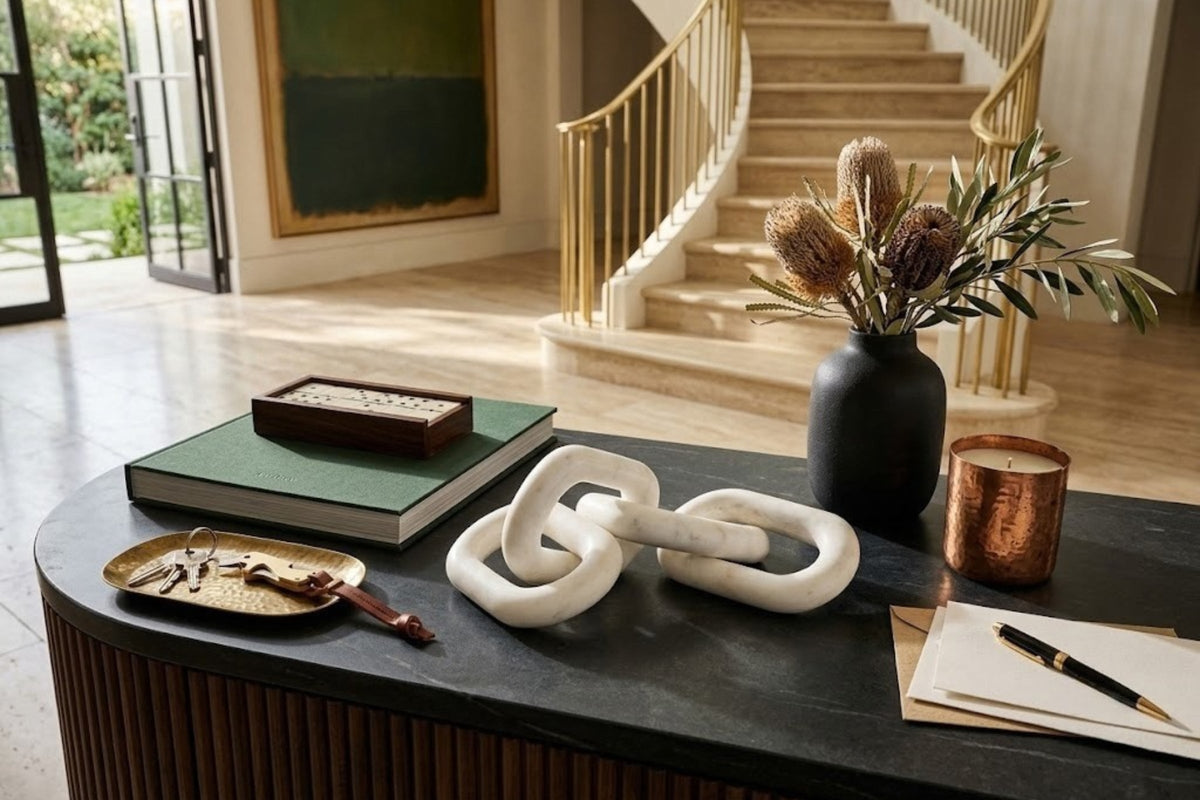
Bronze, copper, leather, and wood patinate. The surface changes chemically or takes up oil from handling, the change is even across the whole piece, and it is generally regarded as an improvement. Wool, cotton, and linen relax, draping more loosely as the fibers settle, without losing structure.
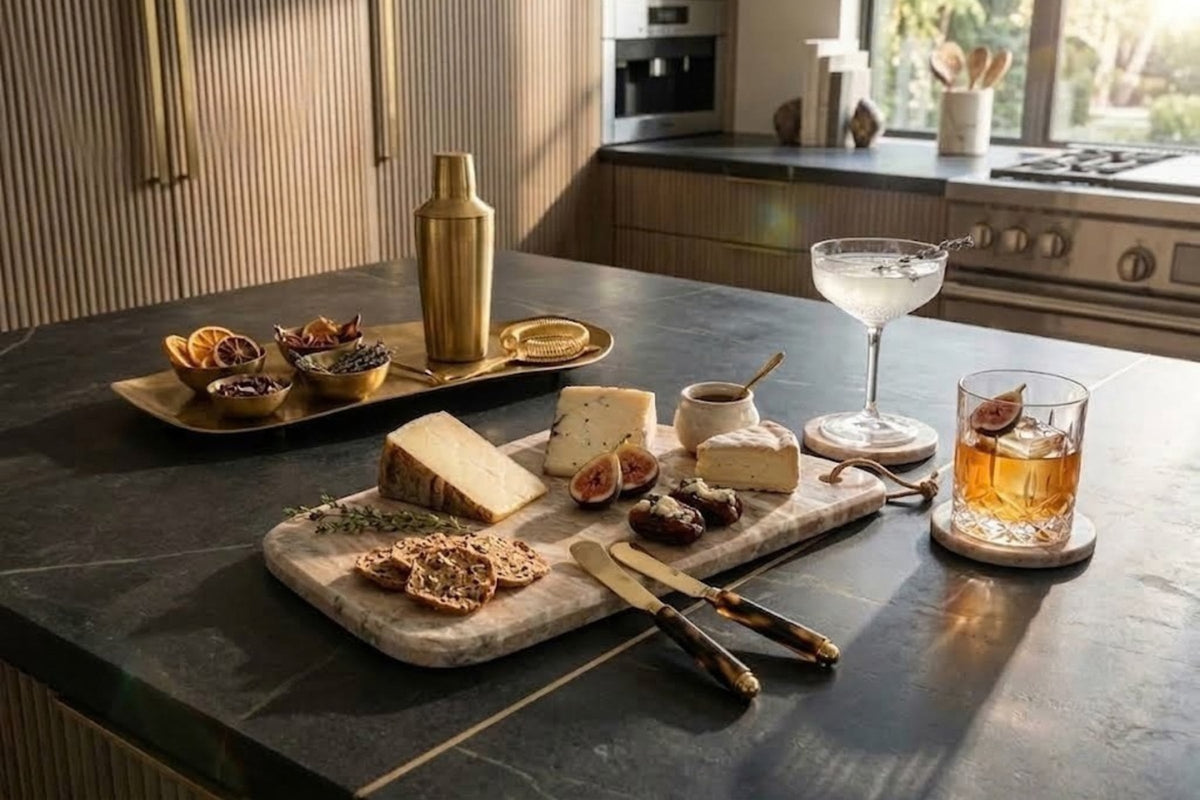
Marble and onyx objects do not belong to that group, and saying so is not a criticism of the stone. Both are calcium carbonate, at roughly equal density and hardness—neither is the harder or more durable of the two. Neither softens with use. Acid etches calcium carbonate on contact, leaving a dull mark exactly where it sat, and a steel blade is harder than the stone, so cutting on it scratches. Stone ages well because it is repairable, not because it improves.
Knowing which group a material belongs to decides how it should be treated.

Surface Evolution Over Time
How do surfaces change with use?
Diffusely in some materials, in isolated marks in others.
Wood and leather change diffusely. Tone deepens across the whole surface as oil is absorbed, and no single incident is legible in the result—which is why the change reads as depth rather than damage.
Stone does the opposite. An etch is an isolated mark with a defined edge: the ring left by a glass, or the outline of a cut lemon, sits as a dull patch on a polished field and reads as precisely what it is. Marble does not deepen in tone with use. Where it darkens, it has absorbed oil, and that is a stain. Both are worth preventing rather than accepting.
The difference between the two is the whole of the matter.
Choosing Timeless Forms
Does form affect how an object ages?
Form supports longevity.
Simple, balanced forms tend to remain relevant over time. Objects defined by proportion rather than ornamentation adapt more easily within changing interiors.
A form also has to survive its own surface. A piece that only works while the polish is perfect has a shorter life than one that still reads correctly once the finish has taken wear.
Material Integrity and Use
Do durable materials age better?
Durability supports longevity, but repairability matters more.
Marble is softer than a steel blade and will scratch under one. What makes it a material worth choosing anyway is that the damage is not terminal: a honed or polished stone surface can be reworked and resealed, returning it to where it started. Repairability, not hardness, is what carries an object across decades.
Strength and maintenance work together.
Living with Change
Should signs of use be prevented?
For some materials, yes. For others, no.
Patina on bronze, copper, leather, and wood is worth leaving. Stripping it returns the object to a state it has moved past and gains nothing.
Etching and staining on marble and onyx are a different case, and should not be treated as character. They are damage. They accumulate, and they are addressed—by keeping the stone sealed, by using a board or liner under anything acidic, by wiping spills before they sit, and by having the surface re-honed when marks build up. Caring for marble and onyx surfaces sets out the routine, and is marble safe for serving food deals with the acid question directly.
The rule is simple: leave what improves, address what does not.
Coatings, Sealers, and the Difference
What types of objects do not age well?
Objects whose appearance is a coating rather than the material beneath.
A lacquer, a plated finish, or a printed surface has nothing behind it. When it wears through, a different material shows, and the object reads as failed rather than aged. There is no restoring it, only refinishing it as new.
A sealer on stone is not the same thing, though the two are easily confused. Stone is routinely sealed, and a sealer is a penetrating treatment that reduces absorption. It does not create the appearance—the stone looks the way it looks without it—and when it wears it is simply reapplied. The distinction is whether the treatment is the object's appearance or a defense of it.
Longevity requires material depth beneath whatever sits on top.

Balancing Function and Longevity
Can functional objects age well?
Yes, and daily use is the test.
Objects used every day—stone trays and bowls, wooden boards, textiles—take the most wear, which is exactly why they reveal whether the choice was sound. A form that still works once the polish has dulled and the surface has been reworked once was well chosen. A form that depended on the finish being untouched was not.
Use is the measure.
Consistency Across a Space
Should all objects age in the same way?
They will not, and the mix is worth understanding.
Wood deepens. Bronze, copper, and leather patinate. Textiles relax. Stone accumulates etching and scratching that is periodically removed rather than absorbed. Together these create a layered environment, provided the stone is maintained on its own terms instead of being left to match the rest.
One rule across all of them would damage at least one.
Choosing with Time in Mind
How should objects be selected for longevity?
Selection should consider material, repairability, and restraint.
Choosing fewer, well-made objects from solid material ensures each piece can be maintained rather than replaced. Ask what a decade of the intended use does to the surface, and whether that damage can be undone.
Longevity begins with selection.
Quick Answers
What materials age well in home decor?
Bronze, copper, leather and oiled wood genuinely improve, because they patinate. Wool, cotton and linen relax and drape more loosely. Marble and onyx are durable and repairable rather than self-improving: they etch and scratch, and they are restored by re-honing and resealing rather than left to change.
Do marble and wood change with use?
Differently. Wood deepens in tone as it absorbs oil from handling, evenly and across the whole surface. Marble does not. It etches where acid touches it and scratches under a steel blade, and both are isolated marks on a polished field. Darkening on marble is an absorbed stain.
Should signs of use be removed?
It depends on the material. Patina on bronze, copper, leather and wood is worth leaving. Etching and staining on marble or onyx are damage: they accumulate, and they are addressed by sealing the stone, keeping acid off it, and having the surface re-honed when marks build up.
What types of decor do not age well?
Objects whose appearance is a coating, such as lacquer, plating or print, because when the coating wears through a different material shows and there is nothing to restore. A penetrating sealer on stone is not this: it reduces absorption without creating the look, and it is reapplied.
How can I choose decor that lasts over time?
Choose solid material over applied finish, simple proportion over ornament, and forms that still work once the surface has taken wear. Ask what the object looks like after a decade of the use you intend for it, and whether the damage that use creates can be repaired.
Final Note
Objects that last are not the ones that escape wear. They are the ones where wear is either welcome or reversible.
Through material, form, and honest maintenance, they hold a presence that stays grounded and complete—becoming not just part of the space, but part of its continuity.